Legacy Is More Than Money: Five Forms of Wealth We Leave Behind
What does it really mean to leave a legacy? Wealth extends beyond money into the knowledge we share, relationships we nurture, culture we preserve and character we model. Explore five forms of wealth that can continue producing value long after we are gone.
When people speak about leaving a legacy, the conversation often turns quickly toward money.
Property. Investments. Businesses. Insurance. Savings. Land. An inheritance.
These things matter.
Anyone who has watched a family struggle because nothing was prepared for the next generation understands that material resources are not trivial. A home can provide stability. Land can provide options. A functioning business can create opportunity. Financial assets can give the next generation room to breathe before they are forced to run.
But money is only one language through which one generation speaks to another.
There are people who inherit property but no wisdom for keeping it.
People who inherit businesses but not the discipline required to lead them.
People who inherit a family name without knowing the stories that gave the name meaning.
And there are people who receive very little money, yet inherit a way of thinking, a network of relationships, a body of knowledge, a cultural memory and a standard of character that alters the direction of their lives.
This is why legacy requires a larger vocabulary.
Legacy is not simply what remains in your name. It is what continues to produce value in other people’s lives after your direct involvement has ended.
Seen this way, wealth becomes more expansive.
Some wealth can be counted.
Some can be taught.
Some can be remembered.
Some can be felt in the security of a relationship.
And some becomes visible only years later, when a child, student, friend, apprentice or community member finds themselves making a difficult decision and hears, somewhere within themselves, the standard you once lived before them.
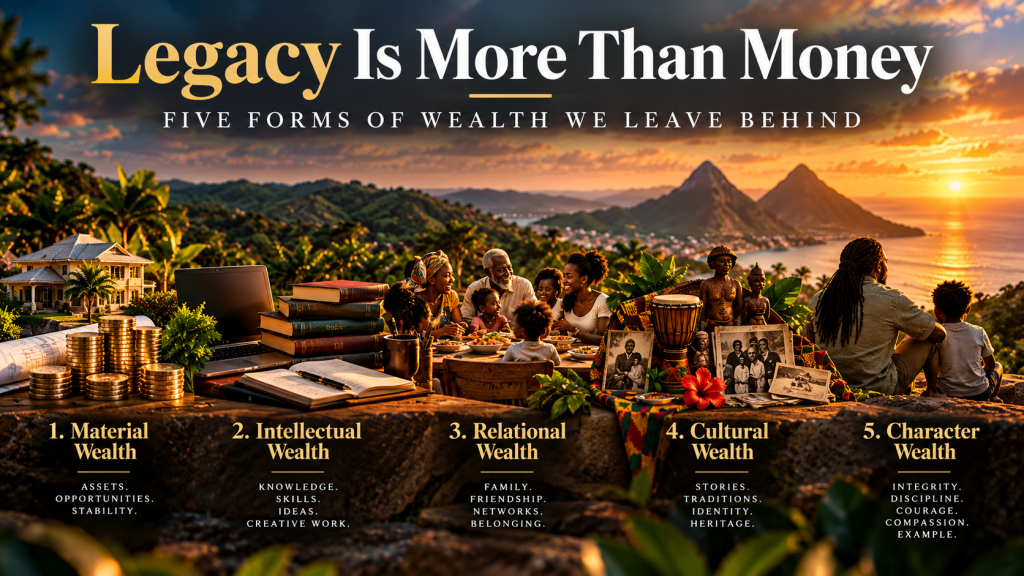
Perhaps there are at least five forms of wealth worth thinking about when we ask what we are truly leaving behind.

Material Wealth: What We Place Into Their Hands
Material wealth is the form we understand most easily because it can be measured.
Money. Property. Investments. Businesses. Land. Equipment. Intellectual property with economic value. Financial accounts. Assets capable of producing income.
These things can materially alter the possibilities available to another human being.
There is no wisdom in romanticising poverty or pretending financial inheritance does not matter. A generation that acquires productive assets and transfers them intelligently may save the generation after it from having to begin at zero.
That matters.
It is one reason the distinction between income and ownership deserves attention. Income helps us live in the present. Assets can continue producing value after the original labour that acquired them has ended.
I explored this more directly in Assets vs Income: Why Earning More Is Only the Beginning. Earning is important, but what we retain, own, build and transfer eventually becomes part of the larger legacy conversation.
The danger comes when we mistake material inheritance for complete inheritance.
A property without clear documentation can become a conflict.
A business without systems can become a burden.
Money without financial understanding can disappear.
Assets without character can become fuel for self-destruction.
Material wealth is powerful because it gives people options.
But options still require judgment.
The deeper responsibility, then, is not merely to leave resources behind. It is to prepare people to understand what those resources are for.
Intellectual Wealth: What We Place Into Their Minds
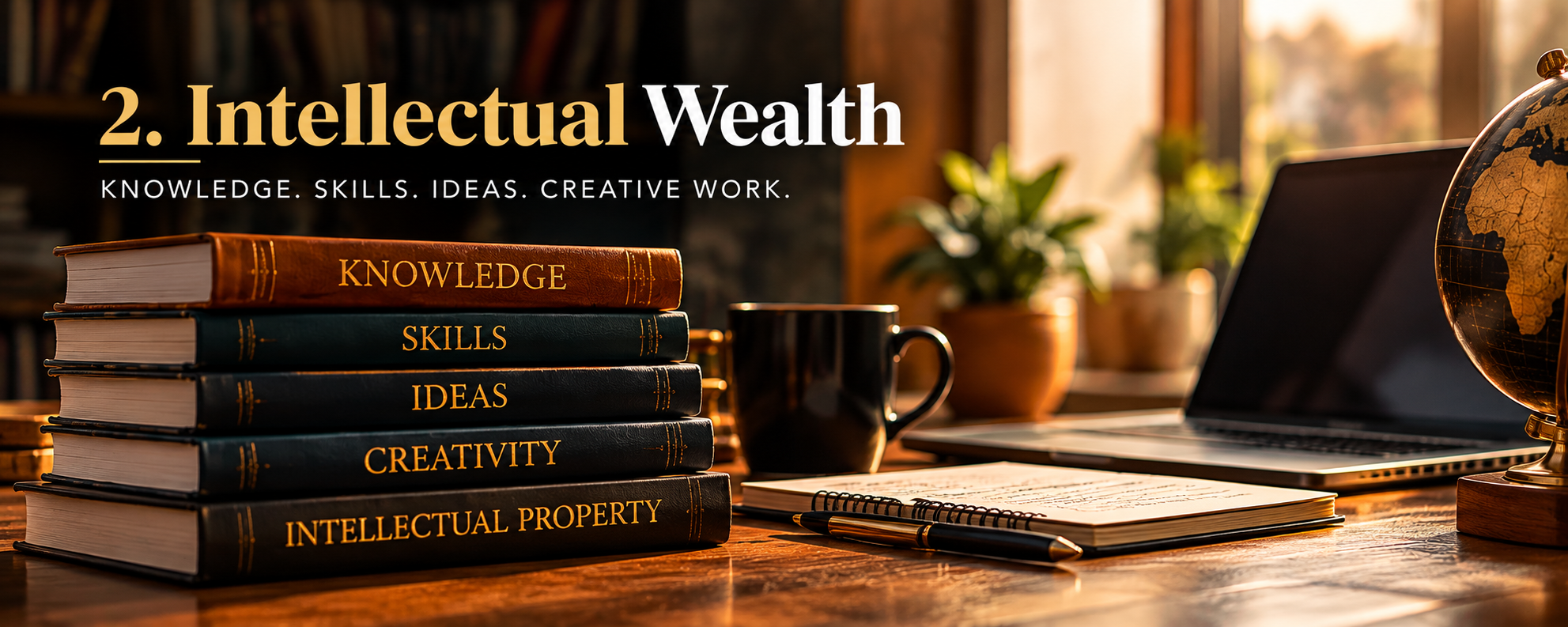
Some of the most valuable things a person possesses cannot be placed in a vault.
Knowledge is one of them.
A craft learned over thirty years.
A method for solving a problem.
A recipe known only by memory.
A way of negotiating.
A business process.
A body of writing.
A musical catalogue.
A design language.
A teaching method.
A philosophy.
A collection of lessons purchased through years of mistakes.
Modern economies increasingly recognise that value does not live only in physical things. The World Intellectual Property Organization distinguishes tangible assets from intangible ones and points to intellectual property, brands, software, data and organisational know-how as important sources of economic value.
But the idea becomes even more interesting when brought down from the level of corporations and returned to the individual.
How much knowledge disappears every time someone dies without documenting what they learned?
How many family businesses have had to rediscover lessons the founder already understood?
How many techniques disappear because the person who mastered them never taught an apprentice?
How many artists create for decades without organising, protecting or preserving their work?
Knowledge trapped inside one person’s head is valuable.
Knowledge transferred becomes legacy.
This is why documentation matters.
Write the method down.
Record the story.
Organise the archive.
Teach someone else the craft.
Protect the intellectual property where appropriate.
Turn repeated knowledge into systems that others can understand.
In From Skill to System: How to Build a Business Around What You Know, I explored the progression from personal ability toward something more transferable: skill becomes method, method becomes offer, knowledge becomes intellectual property, and eventually the work can become a system.
The legacy question pushes that idea further.
What do you know today that someone else should not have to spend twenty years rediscovering?
That answer may contain some of your most important intellectual wealth.
Relational Wealth: Who Knows They Belong
There is another inheritance that rarely appears in estate documents.
The inheritance of relationship.
Who can your children call?
Who knows them well enough to tell them the truth?
Who would open a door for them—not because of entitlement, but because trust has been built across years?
Who carries your stories?
Who will remind them who they are when life makes them forget?
Relational wealth is not simply having a large contact list.
It is trust.
It is family bonds strong enough to survive disagreement.
It is friendship that has been tested.
It is mentorship.
It is community.
It is the ability to enter a room and know that someone there genuinely wants to see you succeed.
It is belonging.
Research on human development gives us good reason to take relationships seriously. The Center on the Developing Child at Harvard University has documented the importance of responsive relationships between children and caring adults in supporting development. The lesson is larger than childhood alone: human beings are shaped inside relationships.
Many of us understand this without needing the language of research.
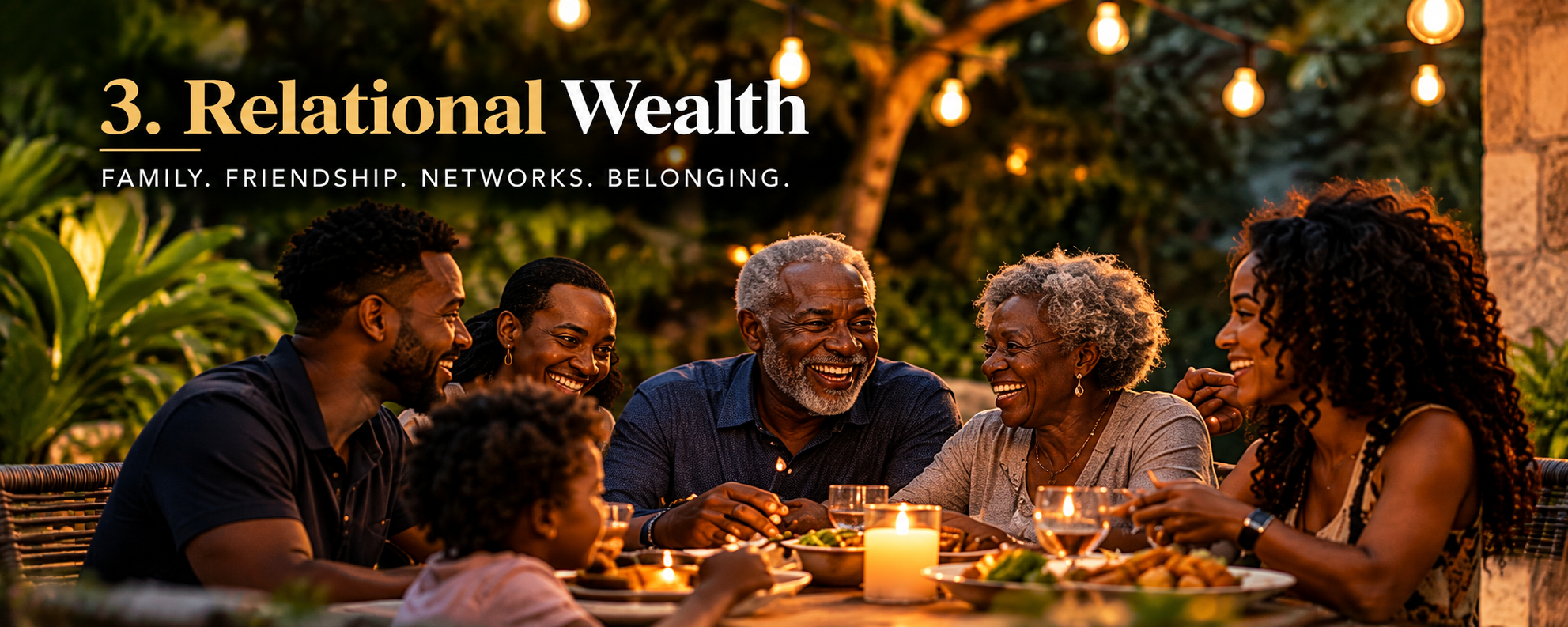
We have seen it around kitchen tables.
At funerals where people arrive before they are asked.
In neighbours who helped raise children who were not biologically theirs.
In teachers who saw something in a student before the student could see it.
In elders whose homes became unofficial universities.
In Caribbean communities where, at their best, kinship has often extended beyond the narrow borders of the nuclear family.
But relational wealth must also be maintained.
A family name is not the same thing as a healthy family.
Being related does not automatically create trust.
Community cannot survive indefinitely on nostalgia.
Relationships become wealth when people invest presence, honesty, responsibility, generosity and time into them.
And perhaps one of the greatest gifts we can leave is a network of people who still know how to care for one another after we are gone.
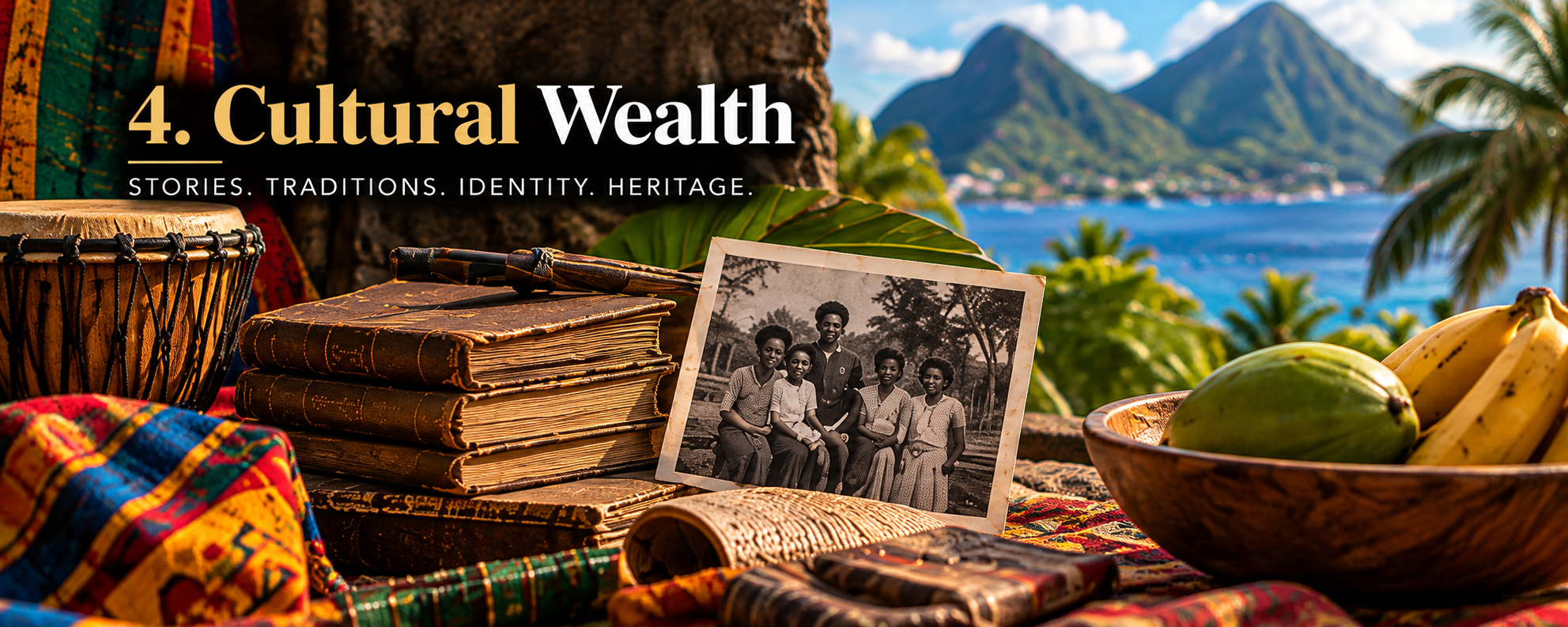
Cultural Wealth: What We Teach Them to Remember
Not everything valuable needs to be monetised.
Some things need to be remembered.
The stories of where the family came from.
The language grandparents spoke.
The songs people sang while working.
The recipes that never had measurements.
The sayings whose meanings cannot be translated perfectly into standard English.
The names of places before those places were renamed.
The rituals surrounding birth, death, marriage, harvest, faith and celebration.
The music.
The humour.
The spiritual understandings.
The history.
The ways a people learned to survive.
UNESCO uses the language of intangible cultural heritage to describe traditions and living expressions inherited from ancestors and passed to descendants: oral traditions, performing arts, social practices, rituals, knowledge and traditional skills.
That language is useful because it reminds us that culture is not merely entertainment.
Culture carries knowledge.
It carries memory.
It carries identity.
It gives people a sense of where they stand in the long human story.
This becomes especially important across the Caribbean and African diaspora, where histories of colonisation, enslavement, migration and cultural disruption have repeatedly complicated the transmission of memory.
For people who have experienced rupture, remembering can itself become a form of rebuilding.
But preservation should not mean freezing culture inside a museum.
Living culture changes.
UNESCO itself emphasises that intangible heritage is continually recreated as it moves between people and generations. What matters is not forcing descendants to perform the past exactly as their ancestors did. What matters is ensuring they have enough access to the inheritance to know what they are adapting.
There is a difference between evolution and amnesia.
A generation should be free to create something new.
But freedom becomes richer when people know what came before them.
Tell the stories.
Record the elders.
Write down the recipes.
Preserve the photographs.
Explain the family names.
Teach the children what the songs meant.
Archive the creative work.
Not because the past should imprison them.
Because roots give people somewhere from which to grow.
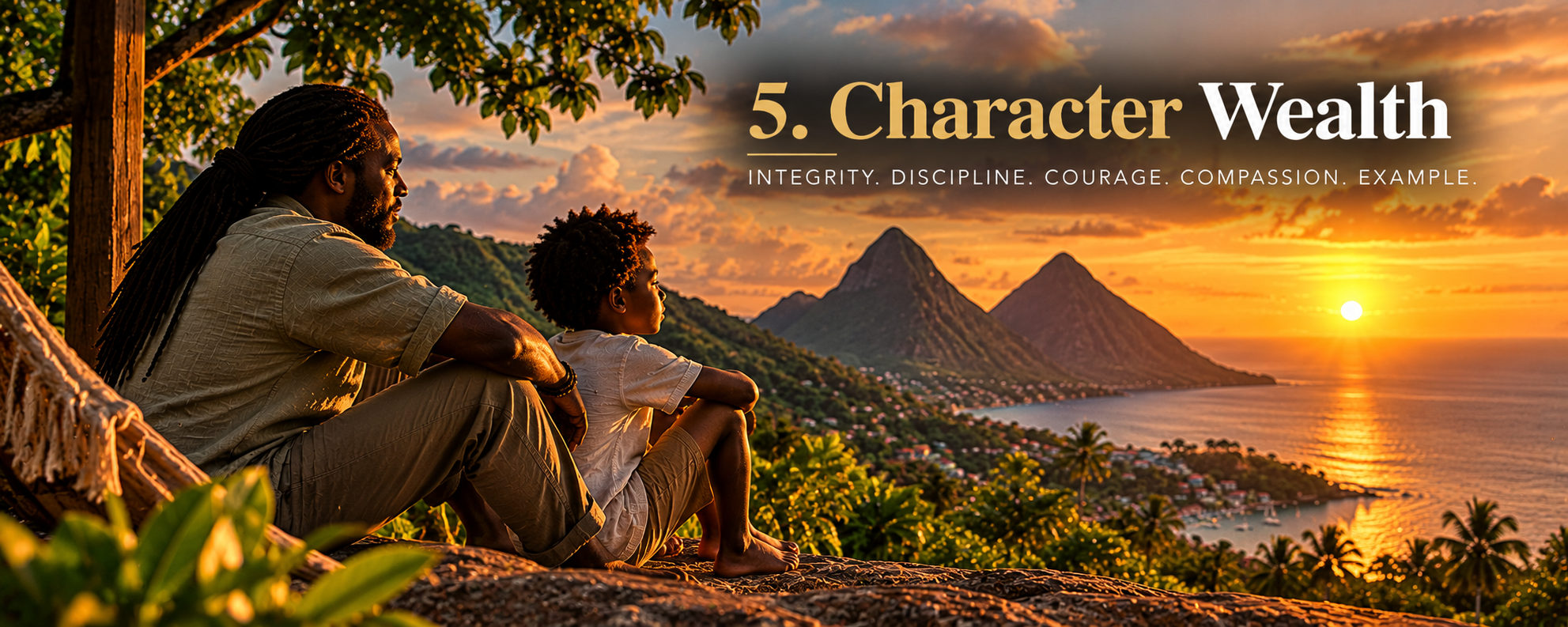
Character Wealth: What Our Lives Teach Without Speaking
Character may be the least measurable inheritance of all.
Yet it may determine what happens to everything else.
You can leave someone money.
But can they delay gratification?
You can leave them a business.
But can they tell the truth when dishonesty would be profitable?
You can leave them opportunities.
But do they possess the discipline to use them?
You can give them an education.
But have they learned humility?
You can introduce them to powerful people.
But have they learned how to treat people who have nothing to offer them?
Character wealth includes integrity, courage, responsibility, discipline, compassion, faith, restraint and the standards by which a person governs themselves when nobody is watching.
These qualities cannot simply be transferred through instruction.
They are modelled.
Children notice how adults speak when angry.
They notice whether promises are kept.
They notice how money is handled.
They notice how people with less status are treated.
They notice whether apologies are possible.
They notice whether success makes someone more generous or more arrogant.
They notice whether principles disappear whenever principles become inconvenient.
We are always teaching something.
The only question is whether what we are teaching is what we intended.
This is where legacy meets self-mastery.
The work we do on ourselves rarely ends with ourselves.
Every pattern we confront changes what we are likely to pass forward.
Every discipline we develop becomes visible to someone.
Every destructive cycle we refuse to continue creates the possibility of a different inheritance.
And every value we consistently embody gives the next generation a living reference point for what that value looks like in practice.
Character is not inherited automatically. But it can be witnessed so consistently that it becomes part of the moral vocabulary of a family, community or institution.
What Happens When These Forms of Wealth Work Together?
The deeper power appears when these forms of wealth stop being treated as separate.
Material wealth without intellectual wealth may be poorly managed.
Intellectual wealth without relationships may never travel far enough to matter.
Relationships without character can become networks of convenience rather than communities of trust.
Culture without transmission can fade into fragments.
Character without resources may still produce dignity and meaning, but resources guided by character can expand what that dignity is able to build.
The goal, then, is not to decide which form of wealth matters most.
It is to recognise that a meaningful legacy is usually an ecosystem.
Ownership.
Knowledge.
Relationships.
Memory.
Character.
Each strengthens the others.
And this changes the way we think about building something capable of surviving us.
As I explored in How to Build Something That Can Outlive You, longevity requires more than personal effort. What lasts must eventually become transferable. Knowledge must be preserved. Systems must be understandable. Ownership must be clear. People must be prepared. The story must be remembered.
Otherwise, what we call legacy may simply be dependence on the founder.
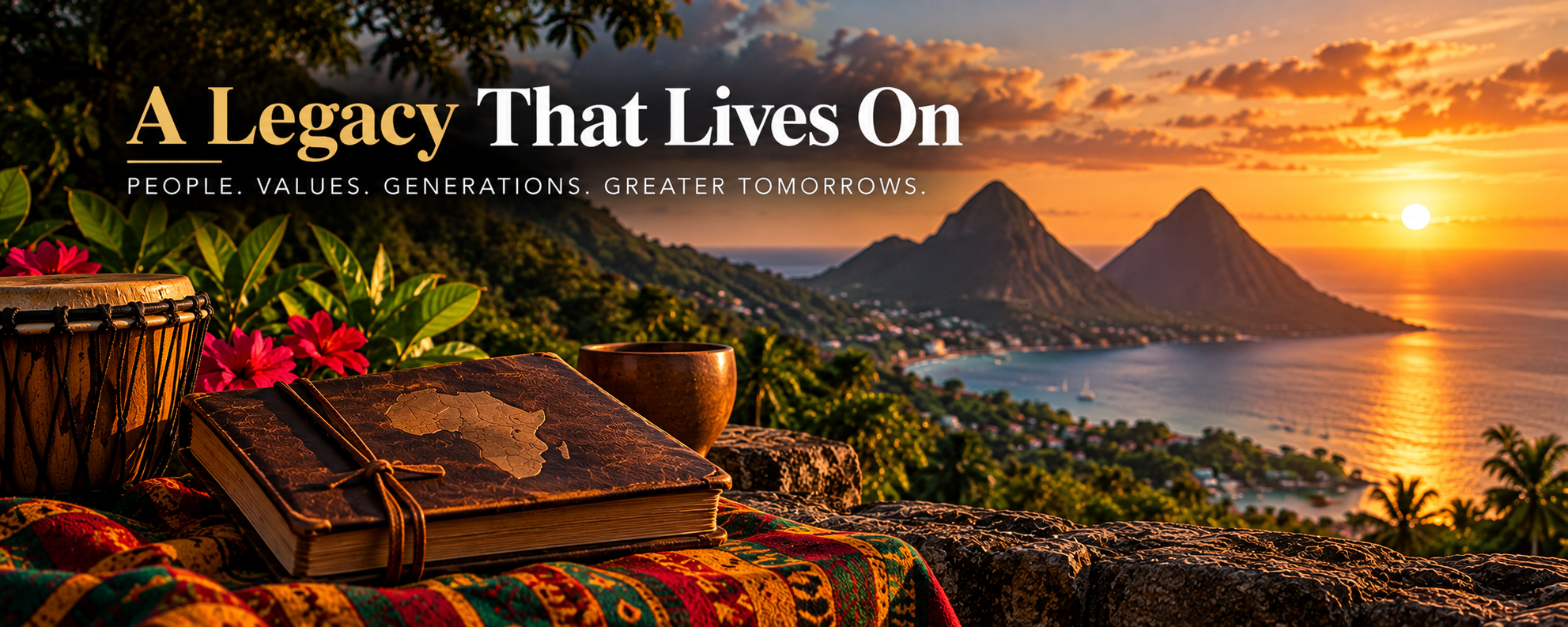
A Legacy That Lives On
There is a strange humility in thinking seriously about legacy.
Eventually, we have to admit that we are temporary.
Our names will not always be spoken.
The buildings may change.
The businesses may evolve.
The children will become adults with ideas of their own.
The culture will continue changing.
Even the systems we build will eventually need to be redesigned for a world we will never see.
Legacy, therefore, cannot simply mean controlling the future from the grave.
It means contributing something useful to the future while we are here.
A piece of land.
A body of knowledge.
A relationship strong enough to become shelter.
A story that prevents forgetting.
A standard of character someone chooses to carry forward.
Perhaps that is enough.
Perhaps the deepest form of legacy is not immortality at all.
It is continuity.
Something good continues.
Something useful remains.
Someone begins farther ahead because you were here.
Someone avoids a mistake because you told the truth about yours.
Someone knows where they came from because you preserved the story.
Someone possesses an asset because you thought beyond consumption.
Someone believes they can build because they watched you build.
Someone knows how to love because they experienced your presence.
Someone chooses integrity in a difficult moment because your example taught them what integrity costs.
That is wealth too.
Perhaps the question is not only, “What will I leave behind?”
It is also: “What will the people who come after me know, understand, own, remember and become because I was here?”
That question deserves more than a quick answer.
Write it somewhere.
Sit with it.
Look at the five forms of wealth again: material, intellectual, relational, cultural and character.
Ask yourself what you are already passing forward.
Then ask what still needs to be built.
Build What Can Continue Without You
Legacy becomes more intentional when we stop treating it as something to think about only at the end of life and begin treating it as something we build during life.
If you are building meaningful work, ownership, systems and something capable of serving generations beyond yourself, explore the Legacy Builders Network.
If you are in a season of realignment and need greater clarity about what you are building, what deserves your attention and what you want the next chapter of your life to represent, book a Creative Alignment Session.
Sources & Further Reading
World Intellectual Property Organization — Valuing Intellectual Property Assets
World Intellectual Property Organization — Intangible Assets and Intellectual Property
UNESCO — What Is Intangible Cultural Heritage?
UNESCO — Transmission of Intangible Cultural Heritage
Center on the Developing Child at Harvard University — A Guide to Serve and Return