What Does It Mean To Keep Your Culture Alive?
Culture is not only what our ancestors left us. It is also what we leave for those who have not arrived yet. A reflection on memory, imagination, Saint Lucian tradition, and the creative responsibility of carrying culture forward.
There is a question we do not ask often enough when we speak about culture.
We speak about preserving it. Protecting it. Teaching it to the next generation. Making sure the old songs are remembered, the language is spoken, the recipes survive, the stories are told and the traditions are not swallowed by a rapidly changing world.
All of this matters.
But there is another question beneath the conversation.
Does culture survive because we preserve it, or because we continue to create from it?
The difference may seem small at first. It is not.
Preservation asks us to remember what was given to us.
Creation asks us what we are going to do with it.
Culture Was Never Meant to Be a Museum Piece
There is something understandable about the desire to protect culture.
Caribbean people know what it means to watch language, memory and tradition come under pressure. Migration changes communities. Global media changes taste. Economic realities move people away from villages, families and old ways of living. Younger generations inherit a world very different from the one their grandparents knew.
Across the African diaspora, similar questions appear again and again.
How do we hold on to ourselves while living inside cultures that are constantly changing us?
Preservation becomes important because forgetting has consequences.
Yet culture becomes fragile when we begin treating it as though its highest purpose is simply to remain unchanged.
Living cultures have never worked that way.
They move.
They absorb.
They improvise.
They encounter new circumstances and create new expressions from old memory.
The Ancestors Were Creators Too
Sometimes we speak about our ancestors as though they were merely guardians of tradition.
But they were creators.
They were improvisers responding to the conditions of their own time.
The music we now call traditional was once new. The dishes we protect as heritage emerged from available ingredients, migration, necessity and imagination. Languages evolved through contact between peoples. Spiritual practices changed as communities moved across oceans and encountered different worlds.
What we inherited was not produced by people standing still.
It came from people adapting.
They created because life demanded creation.
Perhaps honoring them means more than reproducing what they made.
Perhaps it also means continuing the creative work they began.
Listen for the Boom
Saint Lucia offers a powerful example.
Around Christmas, there is a sound that many Saint Lucians recognize before anyone has to explain what it is.
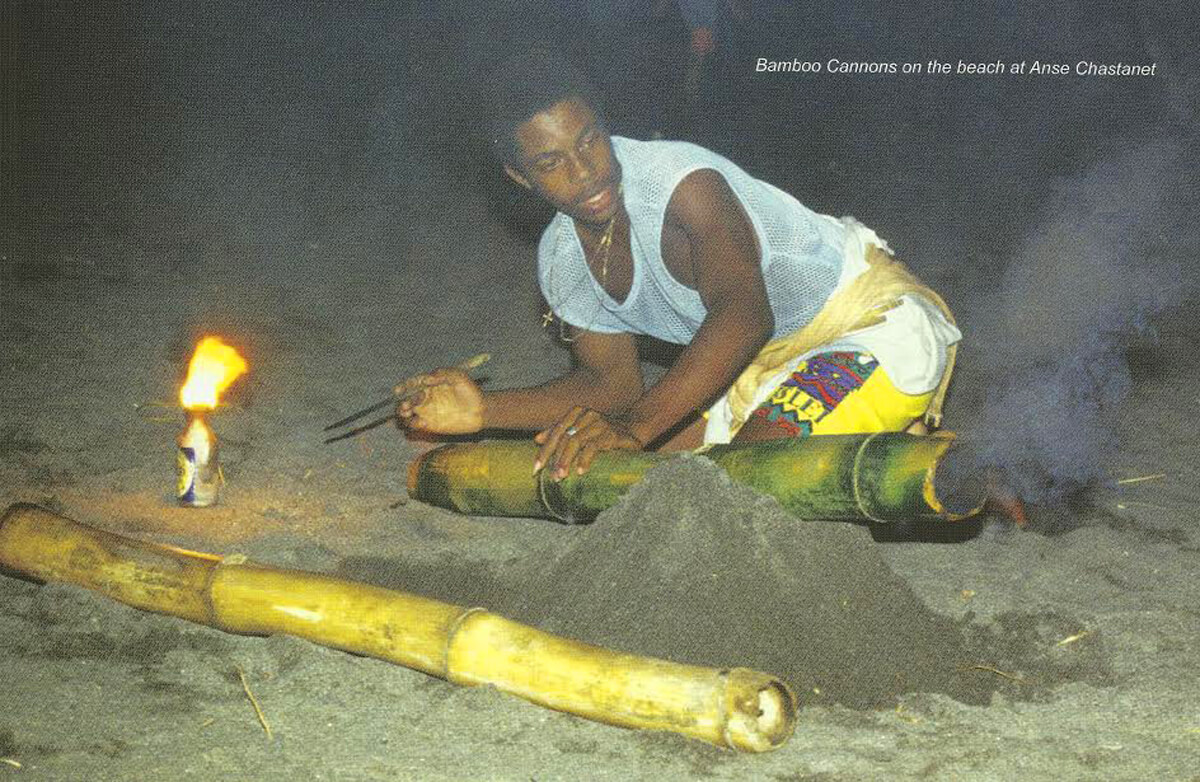
Bamboo bursting.
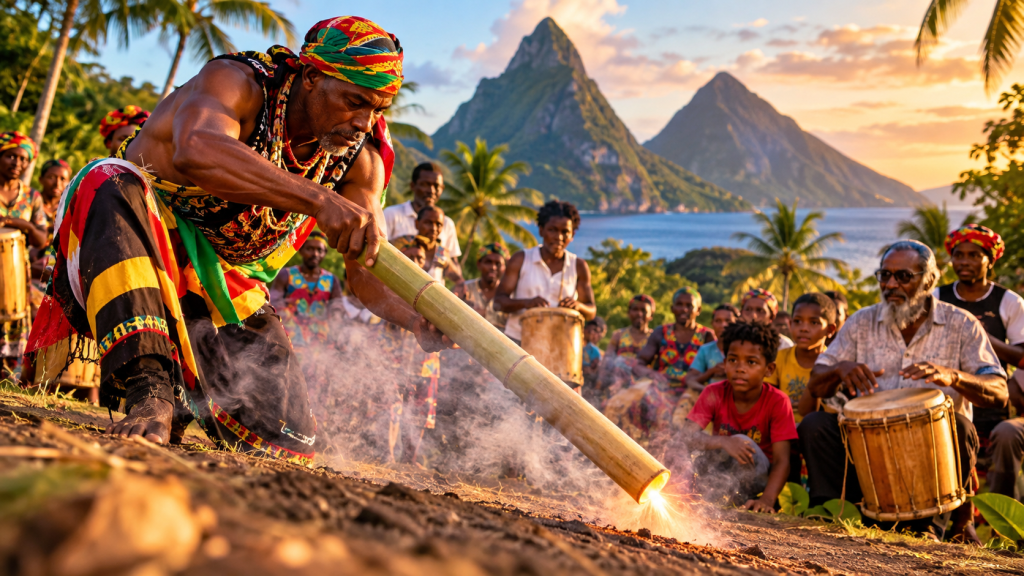
For generations, the tradition has formed part of the island’s Christmas season. Long sections of bamboo become instruments of celebration, producing deep reports that travel across communities and announce something larger than noise.
They announce memory.
They announce season.
They announce place.
There is something almost philosophical about bamboo bursting when you look beyond the spectacle.
Bamboo itself grows abundantly within the tropical landscape. In Saint Lucia, it is more than vegetation; bamboo is recognized as the national plant. Yet human imagination gives the material other meanings.
A plant becomes material.
Material becomes practice.
Practice becomes memory.
Memory becomes celebration.
And eventually, a sound becomes part of what it means to remember Saint Lucia.
This is what living culture does.
It takes what exists in the environment and transforms it through human imagination.
But Look at What Happens Next
The story of bamboo does not have to end with preserving an old tradition.
The same material can enter another generation’s imagination.
In recent years, Saint Lucian artisans have explored bamboo through contemporary craft and product design, transforming it into furniture, baskets, jewellery, household objects and other creative products.
That matters.
Because now we can see two forms of cultural continuity existing beside each other.
One remembers.
The other reimagines.
Neither needs to erase the other.
The old practice can remain meaningful while new practices emerge from the same cultural and natural material.
This is the difference between preserving culture and allowing culture to remain alive.
There Is a Difference Between Repeating and Continuing
Repeating asks:
How did they do it?
Continuing asks:
What can we create from what they gave us?
Both questions have value.
We need people who document language, preserve archives, teach traditional music, protect historical sites, record oral histories and make sure knowledge does not disappear.
But we also need artists, writers, musicians, designers, filmmakers, chefs, architects, educators and entrepreneurs who are willing to take inherited cultural material somewhere new.
A culture that only remembers eventually becomes an archive.
A culture that remembers and creates becomes a civilization still in motion.
When Culture Becomes Material for Creation
Look closely at the Caribbean and you can see this process everywhere.
Rhythm travels from drum to recording studio.
Creole moves from conversation into poetry, theatre, film and digital media.
Traditional foods become the foundation for new culinary businesses.
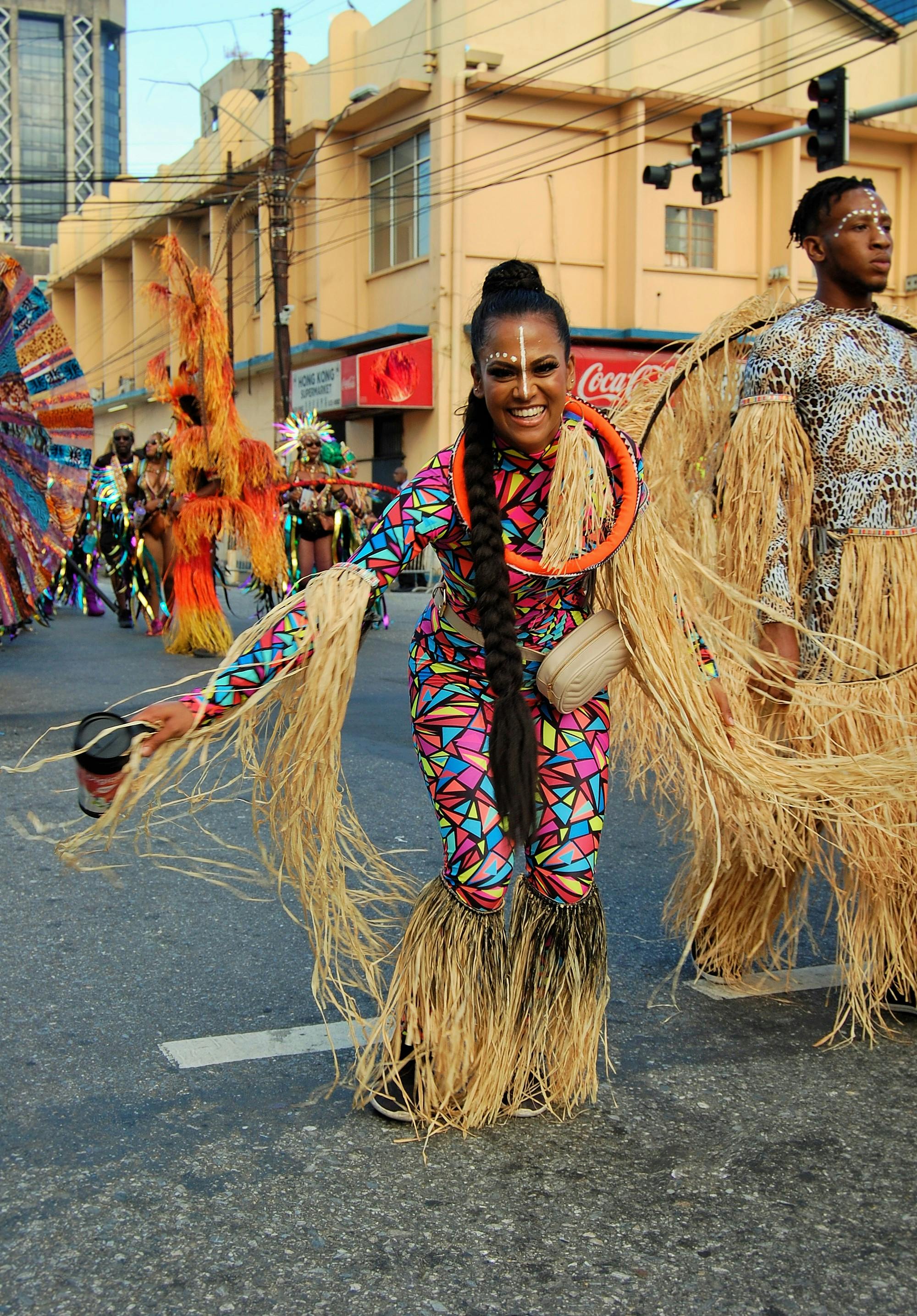
Carnival moves through generations, countries and diasporic communities while continually changing its visual language.
Old stories become novels.
Memory becomes fashion.
History becomes film.
An inherited worldview becomes the beginning of a new philosophy.
Culture survives not because every generation produces an exact copy of the previous one, but because each generation finds a reason to use what it inherited.
The Danger of Preserving Culture Too Carefully
There is a strange danger in loving culture so much that we become afraid to touch it.
When tradition becomes sacred in the wrong way, younger generations may begin to feel that culture belongs to the past.
Something performed at festivals.
Something worn on certain days.
Something explained to tourists.
Something remembered rather than inhabited.
But culture cannot survive only as ceremony.
It must enter ordinary life.
It must enter the studio, the classroom, the kitchen, the business, the book, the screen, the conversation and the imagination.
Otherwise, we risk preserving the appearance of culture while losing its creative power.
Culture Needs Memory. But It Also Needs Imagination.
Memory tells us where we came from.
Imagination asks where we might go.
A people need both.
Without memory, we become disconnected.
Without imagination, we become trapped inside memory.
This may be one of the deeper responsibilities of the Caribbean and African diaspora today.
Not simply to preserve identity in a globalized world, but to continue producing culture powerful enough to shape that world.
Our inheritance is not only something to defend.
It is material to build with.
What Are We Adding to the Inheritance?
Every generation eventually becomes somebody else’s ancestors.
That changes the question.
We spend considerable time asking what previous generations left for us.
Perhaps we should spend equal time asking what we are leaving behind.
What music?
What literature?
What businesses?
What institutions?
What language?
What ideas?
What new traditions?
What ways of seeing the world?
Culture is not only what our ancestors left us.
Culture is also what we leave for those who have not arrived yet.
A Reflection
Think about one cultural tradition you inherited.
It might be a language, a recipe, a rhythm, a spiritual practice, a story, a craft, a family custom or something as distinctly Saint Lucian as the distant boom of bamboo during Christmas.
Now ask a different question.
Not only:
How do I preserve this?
But:
What can I create from it?
That question carries responsibility.
But it also carries freedom.
Culture Is Still Becoming
We were not simply given a finished culture.
We were given materials.
Rhythm. Memory. Language. Story. Food. Faith. Struggle. Beauty. Imagination.
And now the unfinished work belongs to us.
Perhaps the strongest cultures are not those that resist every form of change.
Perhaps they are the cultures capable of remembering themselves while continuing to become something new.
The ancestors created.
So must we.
What Do You Think?
Does culture survive because we preserve it, or because each generation continues creating from it?
What tradition from your own family, island or community deserves not only to be remembered, but reimagined?
Share your thoughts in the comments. These conversations become richer when different generations and different parts of the diaspora bring their experiences to them.
And if this reflection brought someone to mind, share it with them. Culture has always travelled through conversation.
Continue the Journey
If this reflection resonates with where you are in your own journey, there are deeper spaces within the ThaPoetic1 ecosystem where these conversations continue.
The books explore questions of identity, consciousness, creativity and personal sovereignty in greater depth.
Explore ThaPoetic1 BooksIf you are navigating a period of creative or personal realignment, a Creative Alignment Session offers a space to examine where you are, what may be shifting, and what you are being called to build next.
Book a Creative Alignment SessionFor those building meaningful work, creative independence and legacy, the Legacy Builders Network exists as a space for that longer journey.
Enter the Legacy Builders Network