Creative Sovereignty: How to Build Without Losing Yourself
A guide to creating from conviction while building assets you control.
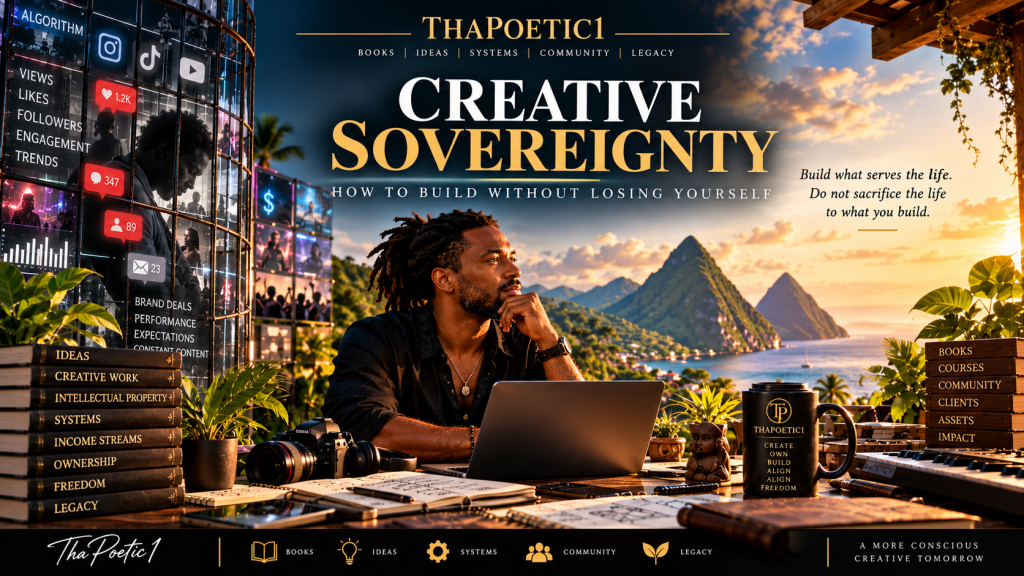
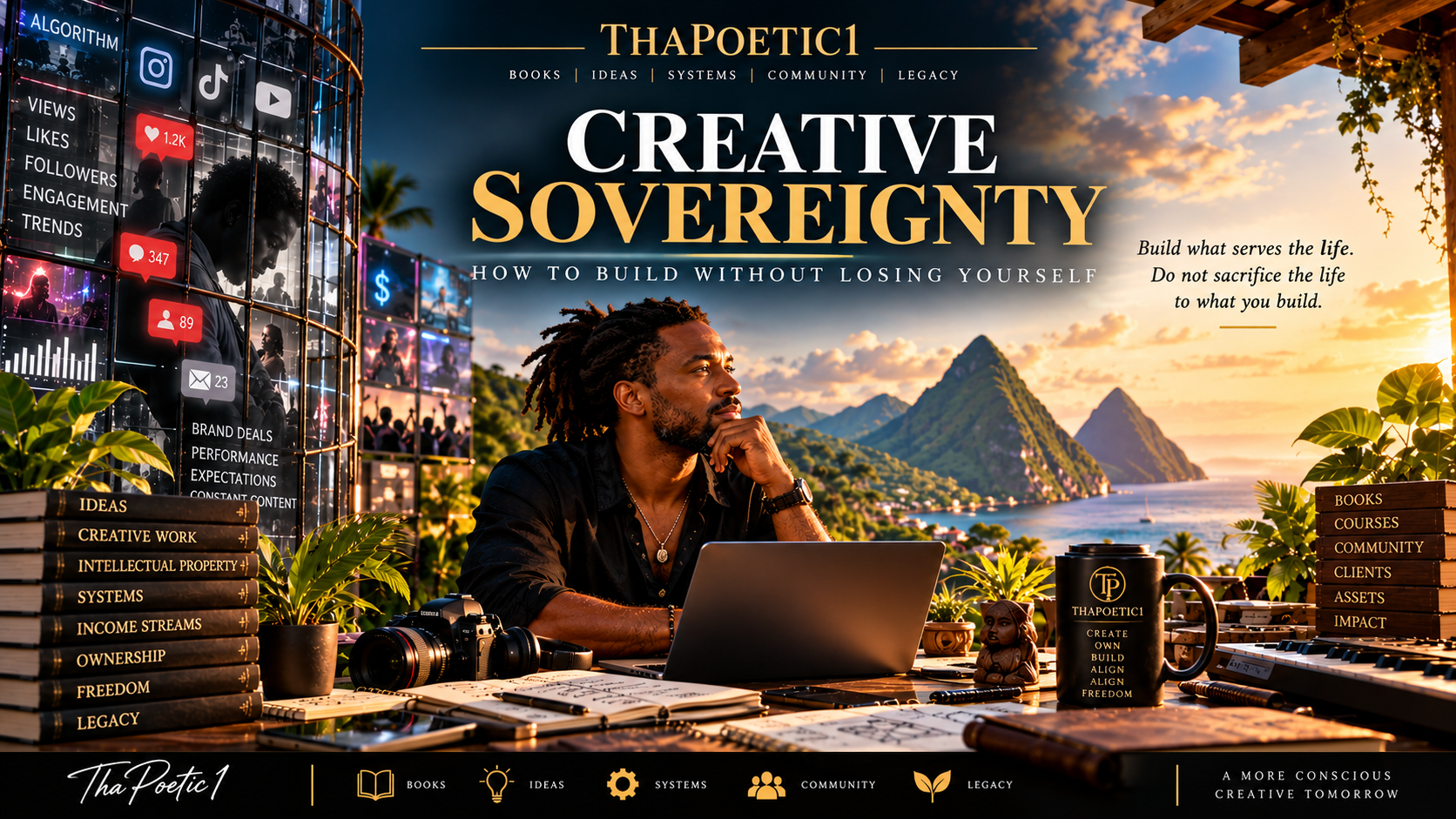
Many people begin creating because they want freedom.
They want to make something that belongs to them. A body of work. A business. A book. A sound. A platform. A community. A life that feels less dictated by someone else’s expectations.
Then the thing begins to grow.
The audience develops expectations. Clients want more of what worked before. The algorithm rewards certain behaviour. Revenue creates obligations. Visibility creates pressure. The creator discovers that success has its own demands.
And without noticing exactly when it happened, the thing that was supposed to create freedom can become another structure that must constantly be obeyed.
That is where the question of creative sovereignty begins.
What is the point of building something successful if maintaining its success requires abandoning yourself?
Creative Sovereignty Is Not Isolation
Sovereignty does not mean refusing influence.
No serious creator exists outside influence.
Culture shapes us. Teachers shape us. Family shapes us. Markets matter. Audiences matter. Money matters. Technology matters.
The question is not whether outside forces will influence you.
The question is whether they will govern you.
Creative sovereignty is the ability to remain in conversation with the world without surrendering authorship of who you are becoming.
Psychological research offers a useful foundation for this distinction. Self-Determination Theory identifies autonomy—the experience of acting with volition rather than simply under pressure—as one of the basic psychological conditions associated with healthier motivation and functioning.
For a creator, that distinction matters.
You can be extraordinarily productive while becoming increasingly disconnected from the reasons you began creating.
This is where creative sovereignty meets self-mastery . Before you can govern the work, you have to notice what is governing you.
Success Can Become Another Form of Captivity
One of the strangest problems in creative life appears when something works.
You make something people love.
So you make another version.
Then another.
The audience becomes familiar with a certain version of you. The market learns where to place you. Platforms learn which version receives engagement.
Eventually, growth can begin asking you not to change.
The market may reward you for remaining recognizable long after your inner life has begun asking you to evolve.
This is the difference between consistency and self-imitation.
Consistency means there is a recognizable philosophy beneath the work.
Self-imitation begins when yesterday’s successful expression becomes today’s obligation.
The Algorithm Does Not Know Who You Are Becoming
Digital platforms have given creators extraordinary access to audiences.
A musician in Saint Lucia can release work that reaches listeners across continents. A writer can publish without waiting for permission from a traditional gatekeeper. A designer can find clients thousands of miles away.
That expansion matters.
But platforms also have their own incentives.
They measure behaviour. They reward engagement. They learn from what performed before.
The International Labour Organization has described this tension directly: digital platforms have expanded opportunity for creative workers while also concentrating power in platforms whose algorithms and governance can shape creative behaviour.
The problem is not that algorithms exist.
The problem begins when the creator slowly reorganizes the self around satisfying them.
An algorithm can optimize for your past. It cannot take responsibility for your becoming.
Use platforms.
Learn distribution.
Understand attention.
But remember that attention is a resource, not a compass.
Build an Audience. But Build Somewhere You Own.
Creative sovereignty also has a structural dimension.
A million followers can be valuable.
But followers on someone else’s platform are not the same as a direct relationship with an audience.
Your website matters.
Your email list matters.
Your books matter.
Your intellectual property matters.
Your archive matters.
Your catalogue matters.
Your direct customer relationships matter.
Your systems matter.
This is part of the transition explored in From Skill to System: How to Build a Business Around What You Know .
The goal is not to own every piece of infrastructure you use. That is rarely realistic.
The goal is to avoid building your entire creative existence on foundations you cannot control.
Money Can Protect Creativity—and Control It
There is an old romantic idea that serious artists should not care about money.
Reality is more complicated.
Economic fragility can make creative freedom extremely difficult.
When every piece of work must solve an immediate financial emergency, experimentation becomes expensive. Financial margin can give a creator time to think, refuse the wrong opportunity and make work whose value may take longer to emerge.
But profitability creates its own danger.
Once something starts paying well, changing it becomes frightening.
Poverty can constrain creative freedom. Profitability can constrain it too, if you become afraid to disturb the machine that pays you.
This is why the movement from income toward ownership matters. As explored in Assets vs Income: Why Earning More Is Only the Beginning , what you build and own with your earnings can gradually create options that income alone cannot guarantee.
Not Everything Meaningful Needs to Become Content
This may be one of the most important boundaries for the modern creator.
We live inside an economy that can turn almost anything into material.
Your morning becomes content.
Your relationship becomes content.
Your grief becomes content.
Your healing becomes content.
Your private realization becomes a post before you have fully understood it yourself.
Eventually, a person can become so accustomed to documenting life that experience itself begins arriving with an imaginary caption attached.
But some things need to remain unperformed.
Some ideas need darkness before they need distribution.
Some experiences should belong only to you and the people who shared them.
Not everything meaningful needs to become content. Some things need to remain life.

Systems Should Protect the Creator
Systems are sometimes presented as machinery for producing more.
More posts. More products. More emails. More output.
But a mature creative system should do something more important.
It should protect the human being at the centre of the work.
Automation should remove unnecessary repetition.
Documentation should reduce dependence on memory.
A team should distribute responsibility.
Artificial intelligence can assist with research, organization, iteration and repetitive production.
But the creator should remain responsible for meaning, judgment, taste and direction.
A good system does not turn the creator into a machine. It reduces the amount of machinery the creator must personally become.
You Are Allowed to Outgrow What Worked
Perhaps this is the hardest part.
Growth sometimes requires disappointing people who understood the previous version of you.
The musician changes sound.
The writer changes subject.
The entrepreneur changes direction.
The public person becomes more private.
The creator stops making the thing everyone keeps requesting.
This does not mean every impulse toward change is wisdom. Sometimes boredom is simply boredom. Sometimes discipline means staying long enough to develop mastery.
But there are also moments when remaining recognizable becomes more dangerous than becoming misunderstood.
You cannot promise an audience that you will never outgrow the version of yourself they discovered.
Build What Serves the Life
The goal of creative sovereignty is not independence from the world.
It is relationship with the world without disappearance of the self.
Build the business.
Grow the audience.
Learn the technology.
Develop systems.
Own your intellectual property.
Create assets.
Make money.
Collaborate.
Become excellent at what you do.
But periodically return to the quieter question underneath all of it:
Is what I am building still serving the life I actually want to live?
Because success is not sovereignty if you are no longer free to become someone new.
And perhaps the deepest form of creative ownership is not owning the platform, the catalogue or the business.
It is retaining authorship of yourself.
When the Work No Longer Feels Entirely Like Yours
Sometimes what you have built does not need to be abandoned.
It needs to be realigned.
If you are navigating a period where your work, business or creative identity still functions externally but no longer feels fully aligned internally, a Creative Alignment Session offers space to examine what the next version needs to become.