The Caribbean Does Not Have a Creativity Problem. It Has an Ownership Question.
The Caribbean has already proven its creative power to the world. The question now is whether we can build the institutions, businesses, archives and systems of ownership necessary to turn cultural influence into lasting sovereignty.
There is a habit in the Caribbean of speaking about creativity as though it were decoration.
Something we celebrate after the serious business has been handled. Music after work. Art after economics. Culture after development. The festival after the meeting.
But perhaps we have been reading the order incorrectly.
Creativity has never been peripheral to Caribbean life. It has been one of the ways we survived history, interpreted experience, preserved memory, created language, challenged limitation and made ourselves visible to one another.
Long before anyone used phrases like “creative economy,” Caribbean people were already turning memory into music, hardship into humour, cloth into identity, language into resistance, rhythm into livelihood and ordinary gatherings into cultural institutions.
The question facing us now is not whether the Caribbean is creative.
That argument was settled generations ago.
The deeper question is whether we are prepared to build structures strong enough for Caribbean people to own the value of what they create.
We Already Know How to Create
Consider how much cultural influence has emerged from a relatively small archipelago.
Reggae. Dancehall. Soca. Calypso. Zouk. Bouyon. Dennery Segment. Carnival. Dub. Sound-system culture. Caribbean literature. Fashion. Food. Language. Visual art. Theatre. Poetry.
Our cultural vocabulary has travelled farther than many of our people ever will.
And this is precisely why the present moment deserves more serious thought.
In September 2026, UNESCO has been publicly emphasizing the need for stronger cultural and creative-industry systems, including financing, market access, intellectual property, skills and institutional support. In Jamaica, the conversation has gone even further, raising questions about artificial intelligence, the use of cultural material in AI systems, compensation for creators and whether communities will retain meaningful ownership of the value produced from their cultural expressions.
These may sound like policy questions.
They are also sovereignty questions.
Because a people can be culturally influential while remaining economically distant from the value their culture produces.
The world can dance to your rhythm without knowing your history. It can borrow your language without understanding your people. It can imitate your aesthetic without strengthening the communities from which that aesthetic emerged.
Visibility and ownership are not the same thing.
That distinction may become one of the defining cultural questions of the next decade.
Read UNESCO’s recent Caribbean discussion on culture, ownership and the creative economy
Culture Is Infrastructure
We normally understand infrastructure as roads, ports, electricity, telecommunications and buildings.
These things matter. A society cannot function without them.
But there is another infrastructure that determines whether a people know who they are.
Stories.
Language.
Memory.
Music.
Ritual.
Archives.
The imagination.
These are not luxuries. They are part of the architecture through which a society recognizes itself.
When cultural memory weakens, people do not simply forget old songs or customs. They can gradually lose the frameworks through which previous generations understood belonging, community, dignity and place.
This is why the work of preserving culture cannot belong only to historians or ministries.
The photographer documenting an old community is participating in cultural preservation.
The musician experimenting with traditional rhythm is participating in cultural evolution.
The writer placing Caribbean characters at the centre of serious literature is participating in cultural memory.
The grandmother insisting that the children understand Kwéyòl is participating in cultural continuity.
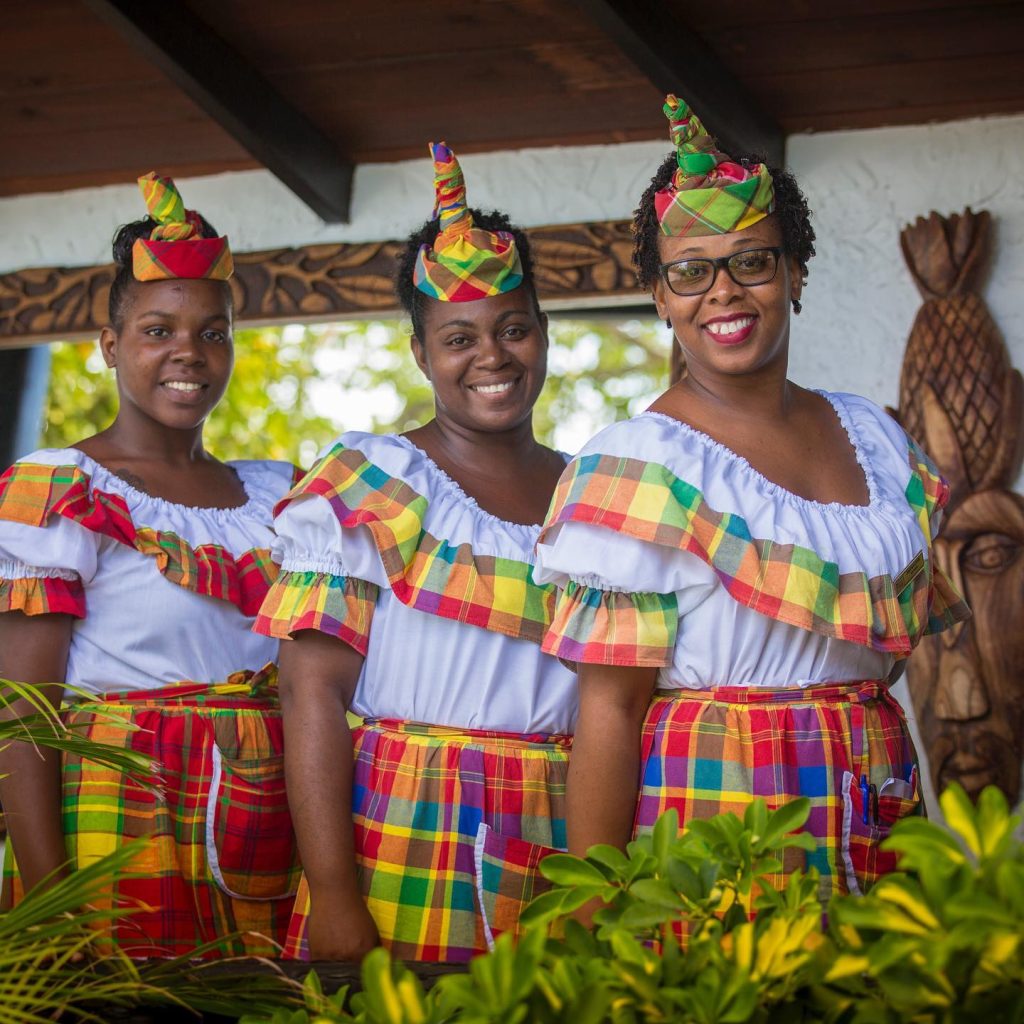
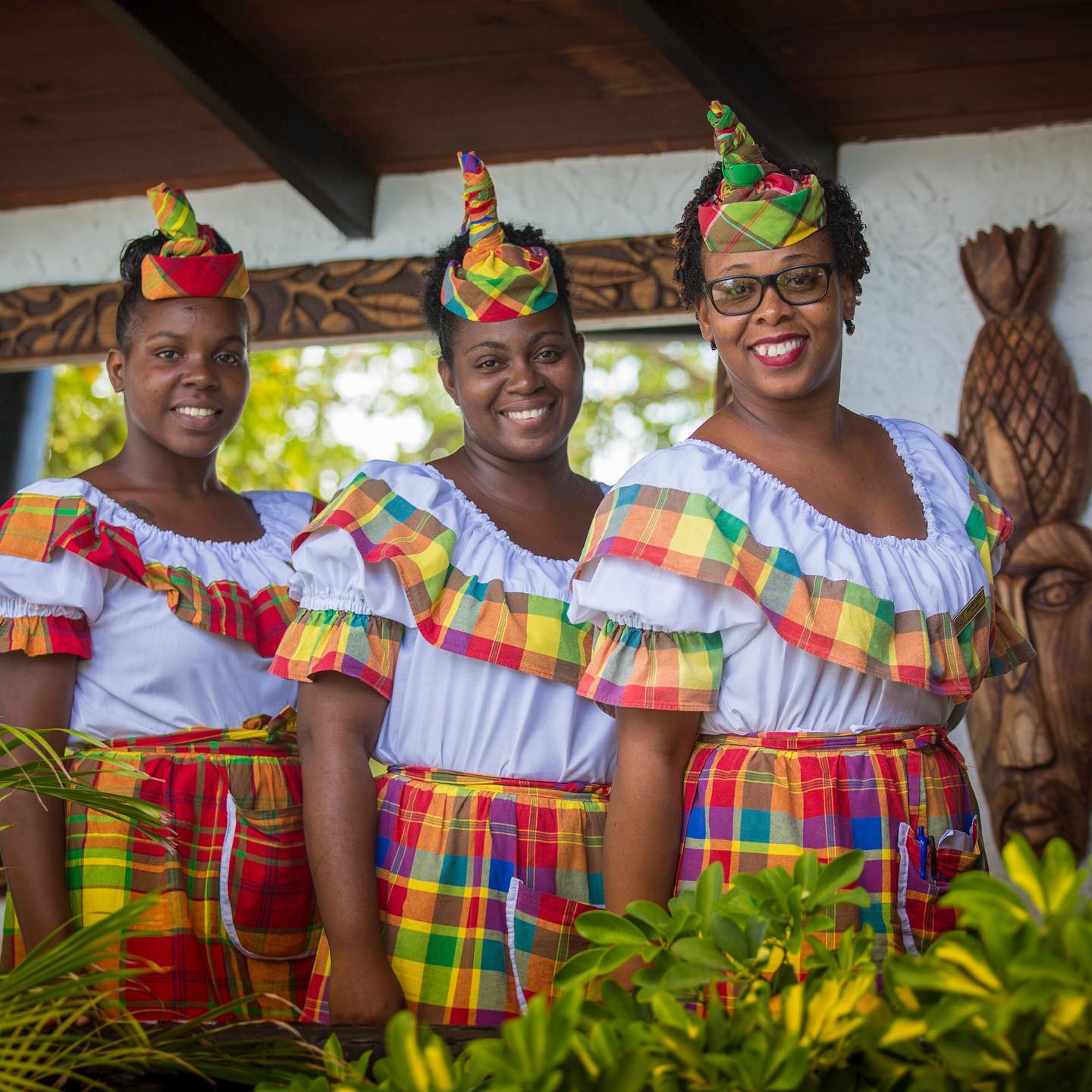
The designer studying Madras rather than merely reproducing it is participating in cultural interpretation.
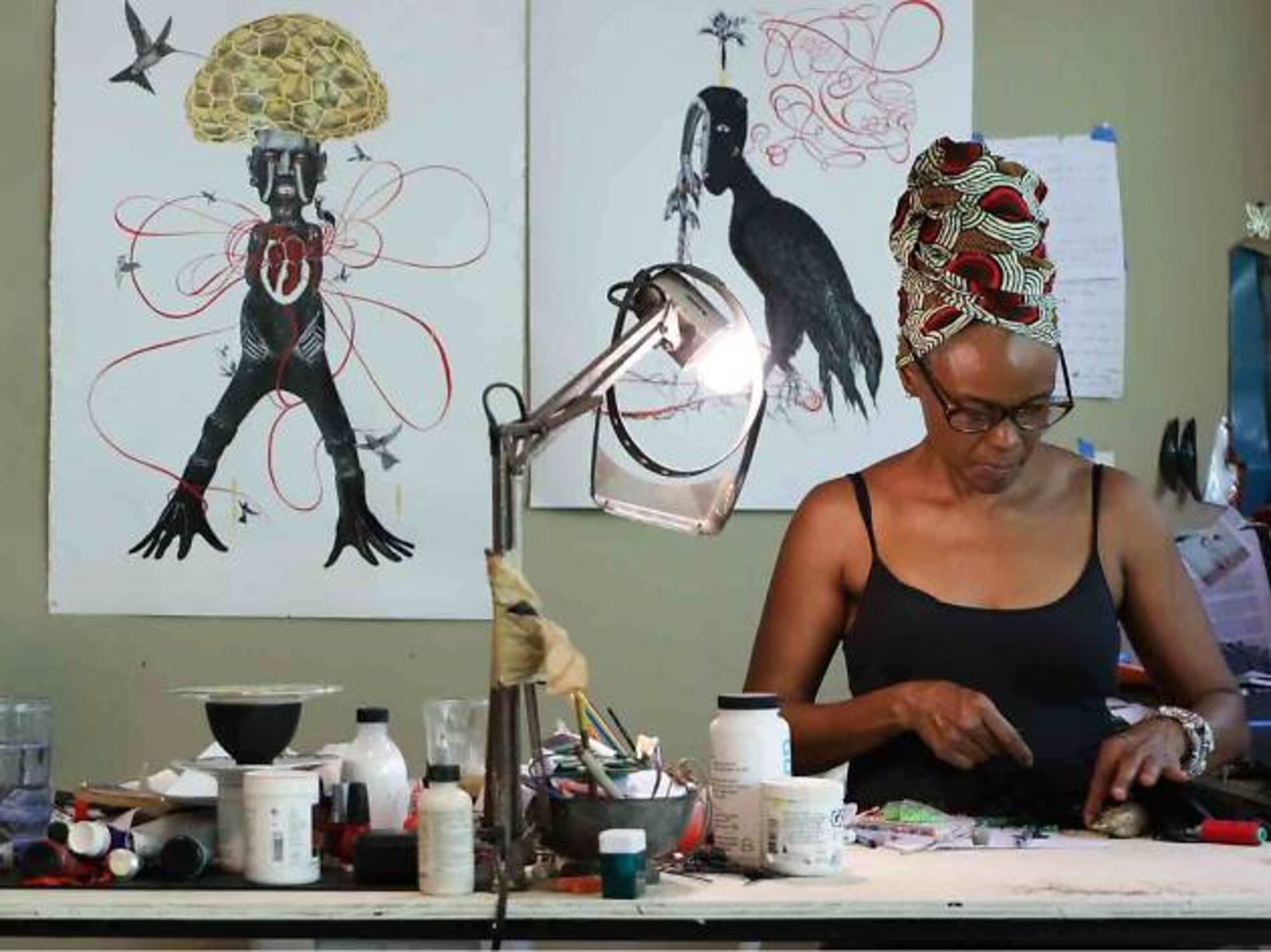
The filmmaker recording stories that would otherwise disappear is building an archive.
None of this is secondary work.
The Difference Between Exposure and Power
For years, creatives have been told to seek exposure.
Get seen. Build an audience. Go viral. Reach the world.
There is nothing inherently wrong with visibility. Every artist needs pathways through which the work can meet its audience.
But exposure without ownership can become another form of extraction.
A million people can encounter an idea while the person who created it remains unable to sustain the conditions necessary to create the next one.
This is where the Caribbean creative conversation must mature.
We should care not only about whether Caribbean culture travels, but about what returns when it does.
Who owns the masters?
Who controls the archive?
Who owns the publishing rights?
Who owns the platform?
Who controls distribution?
Who documents the history?
Who trains the next generation?
Who possesses the data?
And increasingly: who has the right to feed our collective cultural memory into machines capable of reproducing fragments of it at extraordinary scale?
These questions are not arguments against technology or global exchange.
They are arguments for consciousness.
Participation without consciousness has always been expensive.
Saint Lucia Offers Its Own Lesson
Saint Lucia gives us a useful lens through which to consider this.
In September 2026, the Saint Lucia Jazz & Arts Festival was named Music Festival of the Year at the Caribbean Music Awards. The recognition matters not simply as another trophy, but because the festival represents something larger: the ability of a small Caribbean nation to create a cultural experience capable of attracting international attention while placing Saint Lucian and regional talent on significant stages.
Dennery Segment offers another lesson.
Something deeply local can travel.
It does not first have to erase its accent, soften its rhythm or become culturally anonymous before the wider world can respond to it.
The same principle extends beyond music.
Our specificity is not necessarily an obstacle to relevance.
Sometimes specificity is precisely what makes the work valuable.
The creator who understands this stops asking, “How do I make this look global?”
A better question emerges:
How deeply can I understand where I am creating from?
Work with roots can still travel.
In fact, much of the Caribbean work that has travelled furthest did so because it carried a recognisable sense of place.
Read about Saint Lucia Jazz & Arts Festival’s 2026 Caribbean Music Award
What the Age of AI Makes More Urgent
Artificial intelligence complicates this conversation.
We are entering a period in which enormous quantities of human language, imagery, sound and cultural information can be processed and recombined by machines.
For Caribbean creators, this presents genuine possibilities.
A writer in Castries can use tools once available only to large publishing operations. A musician can work across borders without leaving the island. A filmmaker can prototype ideas with equipment that would have seemed impossible to access a generation ago. A small creative company can potentially reach audiences scattered across London, Toronto, New York, Atlanta, Paris, Lagos and the wider Caribbean.
That matters.
But possibility should not make us careless.
If technology becomes more powerful, our understanding of ownership must become more sophisticated with it.
We need creators who understand not only how to make things, but how intellectual property works.
We need archives controlled and preserved by Caribbean institutions and communities.
We need serious conversations about cultural data.
We need businesses built around Caribbean creativity that can survive beyond a single viral moment.
We need young creators who understand that technology is a tool, not an identity.
And perhaps most importantly, we need enough confidence to enter the future without believing that becoming modern requires becoming culturally forgetful.
The Diaspora Is Part of the Infrastructure
Caribbean culture has never remained neatly within Caribbean geography.
Migration changed that long ago.
There are Caribbean families whose lives now stretch across islands and cities, across generations and passports. A child may grow up in London hearing the language of a grandmother from Saint Lucia. A producer in Toronto may carry rhythms inherited from Trinidad. A writer in Brooklyn may spend an entire career trying to understand an island known partly through memory.
The diaspora therefore should not be understood merely as an audience for Caribbean culture.
It is part of the cultural network itself.
It carries memory outward and sometimes returns resources, interpretation, opportunity and new forms of expression.
The challenge is maintaining connection without freezing Caribbean identity into nostalgia.
Culture must be preserved, yes.
But living culture must also be allowed to change.
Our responsibility is not to trap Caribbean identity inside a museum.
It is to remain conscious enough to know what we are carrying forward, what we are transforming and what we are in danger of surrendering without noticing.
The Work Ahead Is Bigger Than Content
Perhaps this is the shift Caribbean creatives most need to make.
Stop thinking only in terms of content.
Think in terms of bodies of work.
Think in terms of intellectual property.
Think in terms of archives.
Think in terms of institutions.
Think in terms of businesses that can outlive trends.
Think in terms of what another Caribbean child might discover fifty years from now because somebody living today decided the work was worth preserving properly.
There is a difference between producing constantly and building deliberately.
The internet rewards the first.
Legacy requires the second.
This is not an argument that every artist must become an entrepreneur or that every cultural expression must be monetised.
Some things possess value precisely because they resist the marketplace.
But where economic value is being generated from Caribbean imagination, Caribbean people should not be embarrassed to ask who owns it, who benefits from it and what structures are being built around it.
Those are mature cultural questions.
What Are We Building That Can Remain?
The Caribbean has already demonstrated that it can influence the world.
We do not need another generation devoted entirely to proving that we are talented.
Talent is abundant.
The more difficult work is creating the conditions in which talent becomes continuity.
That means stronger creative businesses. Better archives. Serious cultural education. More intelligent use of technology. Greater understanding of rights and ownership. Regional collaboration. Diaspora connection. Institutions capable of remembering when individuals are gone.
It also requires something quieter.
It requires creators who take their own work seriously enough to think beyond immediate applause.
A song can entertain a season.
A book can enter a family library.
An archive can restore a missing piece of history.
A business can employ another generation.
An idea, properly protected and developed, can continue travelling long after its creator has left the room.
So perhaps the question for the Caribbean creative is no longer simply:
What can I create?
We have answered that question repeatedly.
The question worthy of this moment is:
What can we create, own, preserve and pass forward?
That is where creativity begins to become sovereignty.
Continue the Conversation
If this reflection resonates with where you are in your own creative journey, there are deeper rooms within the ThaPoetic1 ecosystem where these conversations continue.
The books explore questions of identity, consciousness, creativity and personal sovereignty in greater depth.
If you are navigating a period of creative or personal realignment, a Creative Alignment Session may offer a space to examine what you are building, what may need to change, and what deserves your attention now.
And for those thinking beyond individual success toward meaningful work, ownership and legacy, the Legacy Builders Network exists for that longer journey.
The purpose is not simply to create more.
It is to become more conscious of what our creativity is capable of building.