Understanding the Risks and Rewards of Long-Term and Short-Term Investing

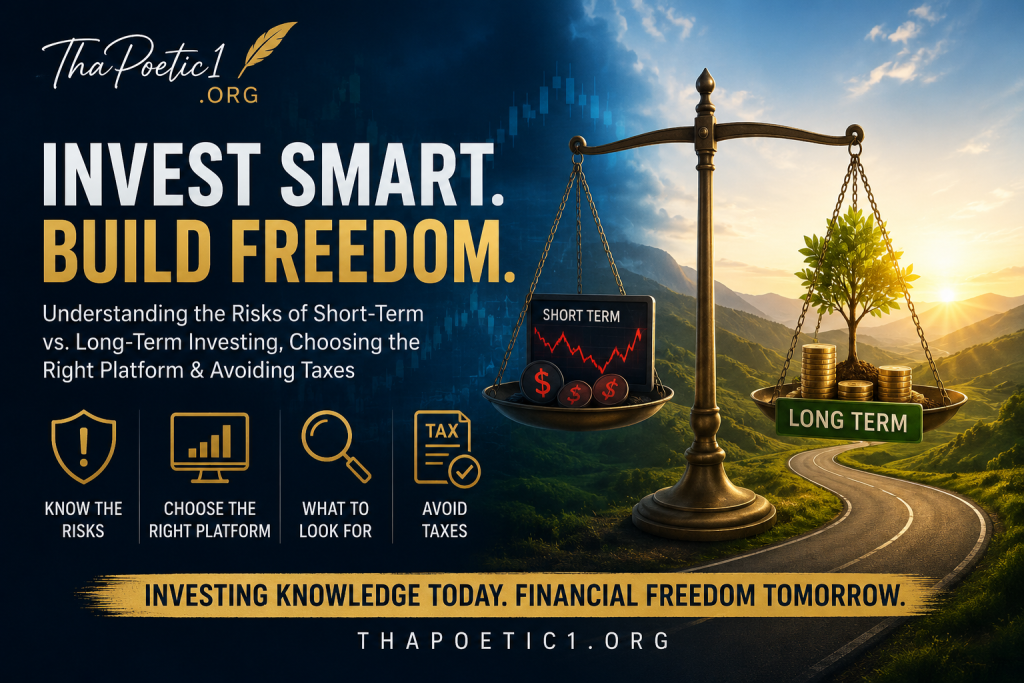
Investing is a powerful tool for building wealth, but it comes with inherent risks. Whether you’re a novice or a seasoned investor, understanding the nuances between long-term and short-term investing is crucial. This article will delve into the risks associated with both strategies and guide you on what to look for when choosing an investment platform, especially as a beginner. We’ll also touch on strategies to spot and mitigate taxes.
Long-Term Investing: Risks and Considerations
1. Market Volatility:
- Risk: Over time, markets experience fluctuations due to economic cycles, geopolitical events, and changes in market sentiment.
- Mitigation: Diversify your portfolio across various asset classes (stocks, bonds, real estate) to cushion against market swings.
2. Inflation Risk:
- Risk: Over long periods, inflation can erode the purchasing power of your returns.
- Mitigation: Invest in assets that historically outpace inflation, such as stocks and real estate.
3. Opportunity Cost:
- Risk: Committing capital to long-term investments can mean missing out on other potentially lucrative opportunities.
- Mitigation: Maintain a balanced approach with a portion of your portfolio allocated to shorter-term opportunities.
4. Company-Specific Risks:
- Risk: Individual stocks can suffer from poor management, competition, or market changes.
- Mitigation: Research thoroughly and consider broad-based index funds or ETFs to reduce exposure to any single company.
Short-Term Investing: Risks and Considerations
1. Market Timing:
- Risk: Successfully timing the market is challenging and can lead to significant losses if not done correctly.
- Mitigation: Use technical analysis and stay informed about market trends. Consider setting stop-loss orders to limit potential losses.
2. Liquidity Risk:
- Risk: Certain investments may be difficult to sell quickly without a price concession.
- Mitigation: Stick to highly liquid assets such as large-cap stocks, bonds, and money market funds.
3. Higher Costs and Fees:
- Risk: Frequent trading can rack up substantial fees and commissions, eating into your profits.
- Mitigation: Choose a platform with low fees and consider long-term capital gains tax advantages.
4. Emotional Investing:
- Risk: Short-term market movements can lead to emotional decisions, resulting in buying high and selling low.
- Mitigation: Develop a disciplined investment strategy and stick to it, regardless of market noise.
Choosing the Right Investment Platform
When selecting an investment platform, especially as a beginner, consider the following factors:
1. User-Friendliness:
- Look for platforms with intuitive interfaces and comprehensive educational resources.
2. Fees and Commissions:
- Compare the fee structures of different platforms. Opt for those offering low or no commissions on trades.
3. Investment Options:
- Ensure the platform offers a wide range of investment options, including stocks, bonds, ETFs, mutual funds, and possibly alternative investments.
4. Research and Tools:
- Access to research reports, analytical tools, and real-time data can significantly enhance your investment decisions.
5. Security Measures:
- Confirm that the platform has robust security features, including two-factor authentication and insurance coverage for brokerage accounts.
6. Customer Support:
- Reliable customer service can be a lifesaver when you encounter issues or have questions about your investments.
Tax Considerations in Investing
Taxes can significantly impact your investment returns. Here are some strategies to help you spot and avoid unnecessary taxes:
1. Tax-Advantaged Accounts:
- Utilize accounts like IRAs and 401(k)s to defer or avoid taxes on investment gains.
2. Long-Term vs. Short-Term Capital Gains:
- Understand the difference between long-term and short-term capital gains tax rates. Holding investments for over a year typically results in lower tax rates.
3. Tax-Loss Harvesting:
- Offset capital gains by selling losing investments to reduce your overall tax liability.
4. Dividend Taxes:
- Be aware of the tax treatment of dividends. Qualified dividends are taxed at a lower rate compared to ordinary income.
5. Estate Planning:
- Plan for the transfer of your wealth to minimize estate taxes through trusts and other estate planning tools.
Conclusion
Both long-term and short-term investing carry distinct risks and rewards. By understanding these risks and carefully selecting the right investment platform, you can make informed decisions that align with your financial goals. Additionally, staying mindful of tax implications and employing strategies to mitigate them will help you maximize your returns. Remember, successful investing requires a balance of knowledge, discipline, and a strategic approach tailored to your unique financial situation.
About The Author

Founder of ThaPoetic1
I Help Others Build Clarity, Wealth & Legacy ➜ ThaPoetic1.org
🧠 Modern Philosophy | 📚 Personal Development 🌱
- Daneille Louis

- Daneille Louis

- Daneille Louis

- Daneille Louis

Where philosophy becomes practice.
Legacy Builders Network is the official classroom of the ThaPoetic1 ecosystem — where courses, guided frameworks, implementation challenges, and community support turn reflection into action.
Enter The Classroom → Join The Newsletter