Why Most Creative People Feel Lost in the Modern Internet
There is a quiet exhaustion many creative people are carrying right now that has very little to do with talent.
It is not a lack of intelligence.
Not a lack of ideas.
Not even a lack of ambition.
It is something deeper.
Many artists, writers, entrepreneurs, musicians, and thinkers are trying to build meaningful lives inside systems designed to reward constant performance rather than genuine alignment.
The internet promised freedom.
For a moment, it even felt like liberation.
A person from a small island could suddenly reach the world. A writer no longer needed permission from traditional gatekeepers. A musician could distribute music independently. A thinker could build a community around ideas instead of institutions.
But somewhere along the way, many creatives stopped building lives and started building reactions.
The pressure to remain visible slowly replaced the responsibility to remain connected to self.
That distinction matters more than most people realize.
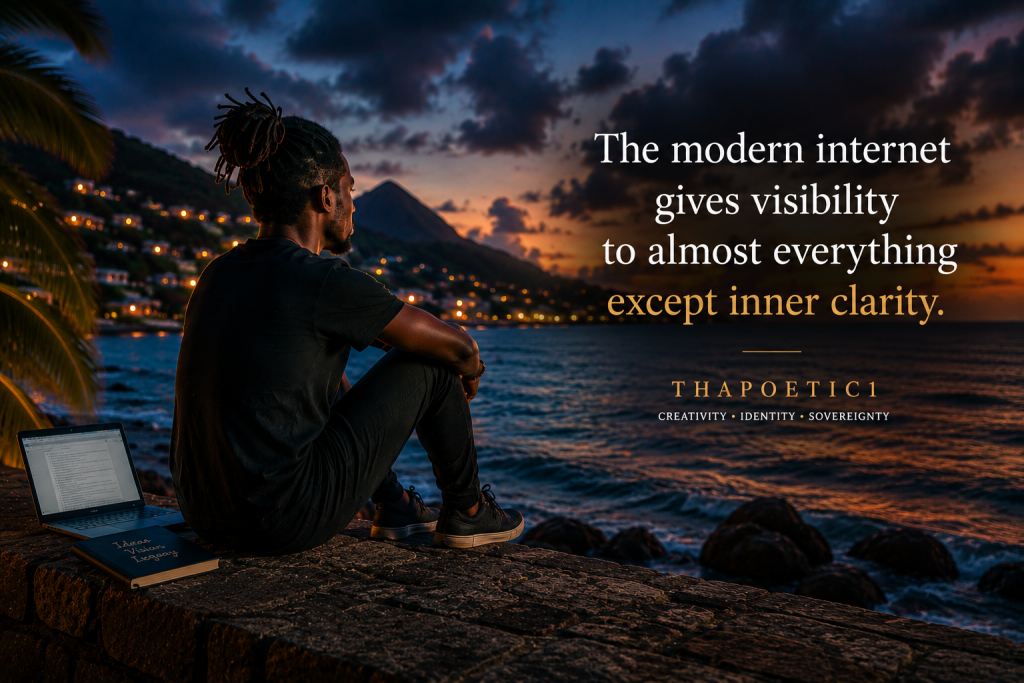
The modern internet gives visibility to almost everything except inner clarity.
One of the strangest things about the modern era is that people can now be deeply connected digitally while becoming increasingly disconnected internally.
The algorithm rewards immediacy.
Real growth often requires silence.
The algorithm rewards frequency.
Wisdom usually develops slowly.
The algorithm rewards performance.
Identity requires reflection.
This creates an invisible conflict inside many creative people.
They begin creating from pressure instead of conviction.
Over time, creativity stops feeling sacred and starts feeling transactional.
Even success can begin to feel hollow when a person no longer recognizes themselves inside the work they produce.
Many people are not burned out because they work too hard.
They are burned out because too much of their energy is spent maintaining versions of themselves that were shaped by external expectations.
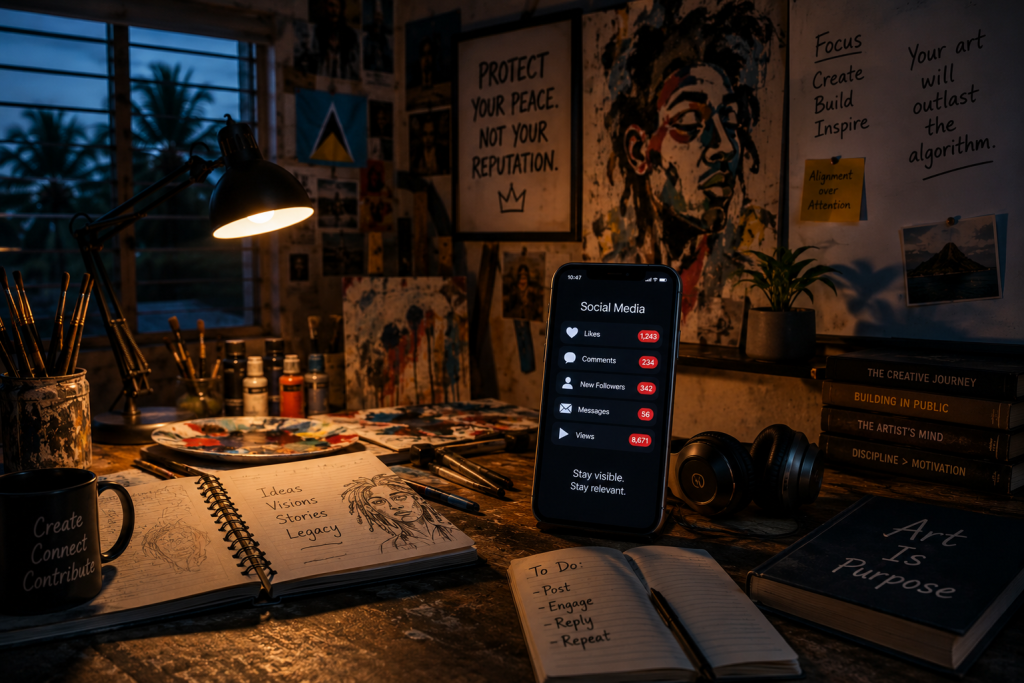
This is especially important within Caribbean and diaspora communities where creativity has historically carried deeper cultural weight.
Art was never just content.
Music was memory.
Storytelling was preservation.
Creativity was identity, resistance, healing, and survival.
When creativity becomes disconnected from meaning, people may still produce work, but something spiritual quietly leaves the process.
Perhaps this is why so many people feel emotionally scattered despite appearing productive online.
The modern world trains people to optimize attention before they understand themselves.
But real creative power rarely comes from urgency.
It comes from clarity.
From knowing what deserves your energy and what merely demands your reaction.
From understanding that not every opportunity is aligned with your spirit.
From recognizing that peace is not laziness.
And that slowing down enough to hear your own thoughts may now be one of the most radical things a creative person can do.
There are people quietly rebuilding themselves right now.
Not for aesthetics.
Not for branding.
But because they are beginning to realize that a meaningful life cannot be outsourced to algorithms.
That realization changes everything.
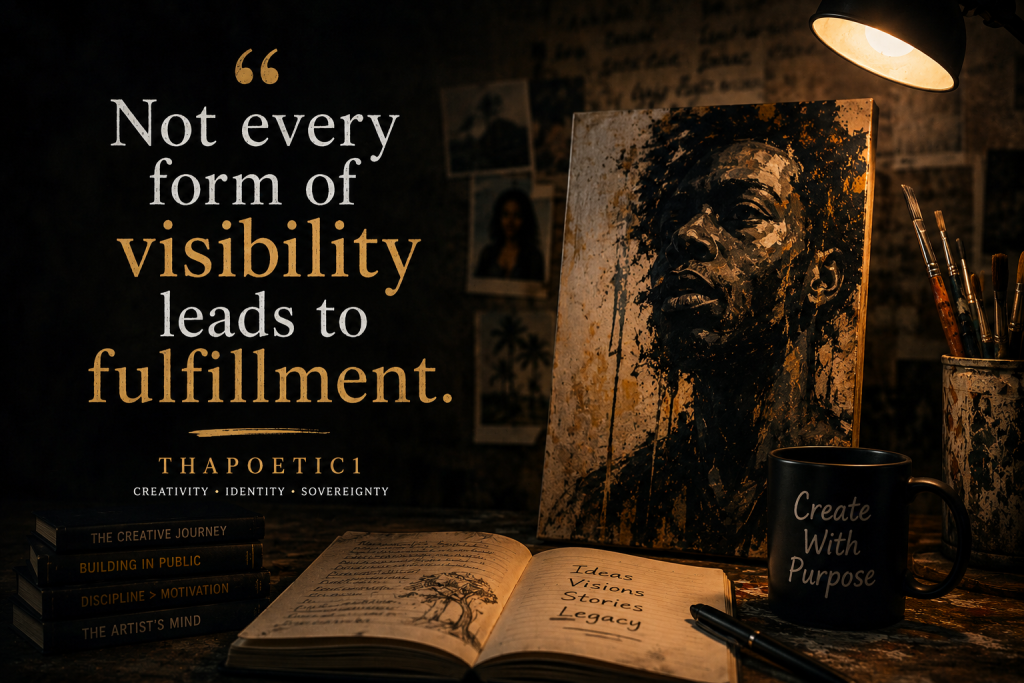
The future will likely belong to people who can remain deeply human in systems designed to fragment attention.
People who can still think carefully.
Still create intentionally.
Still protect their inner world while participating in the modern one.
That may ultimately become the real form of sovereignty in this era.
Not isolation from technology.
But the ability to use it without losing yourself inside it.
If this reflection resonates with where you currently are in your creative or personal journey, there are deeper conversations unfolding within the ThaPoetic1 ecosystem around identity, clarity, creativity, and sovereignty.
For those navigating periods of personal or creative realignment, a Creative Alignment Session may offer space for reflection and direction.
And for builders, thinkers, and visionaries creating meaningful work for the future, the Legacy Builders Network exists as a space for those conversations to continue.
About The Author
Founder of ThaPoetic1
I Help Others Build Clarity, Wealth & Legacy ➜ ThaPoetic1.org
🧠 Modern Philosophy | 📚 Personal Development 🌱
- Daneille Louis
- Daneille Louis

- Daneille Louis

Where philosophy becomes practice.
Legacy Builders Network is the official classroom of the ThaPoetic1 ecosystem — where courses, guided frameworks, implementation challenges, and community support turn reflection into action.
Enter The Classroom → Join The Newsletter