A Discussion for the Diaspora
What Does It Mean to Keep Your Culture Alive?
Does culture survive because we preserve it, or because we continue to create from it?
Stock photograph: Pexels
There is a particular way we speak about culture when we are afraid of losing it.
We talk about preservation. We talk about protecting traditions, teaching the language to our children, keeping the recipes, remembering the songs, wearing the clothing, passing down the stories.
And there is wisdom in that.
A people without memory can easily become disconnected from themselves. When the stories disappear, when the language becomes unfamiliar, when the old songs are no longer sung, something more than information is lost. A thread between generations begins to loosen.
But there is another question we do not ask often enough.
Does culture survive because we preserve it, or because we continue to create from it?
Perhaps the difference matters more than we realize.
Culture Was Never Meant to Be a Museum Piece
When we imagine cultural preservation, we sometimes imagine a frozen image of the past.
The old song exactly as it was sung. The traditional recipe prepared exactly as our grandparents prepared it. The old garment worn in precisely the same way. The story repeated without alteration.
There is value in remembering things accurately. But culture has never been completely still.
The Caribbean is one of the clearest examples of this.
Its cultures were shaped through migration, resistance, survival, adaptation, faith, language, memory and creativity. Different histories met each other here, sometimes violently and sometimes unexpectedly, and from those encounters came new forms of music, food, language, celebration, storytelling and identity.
The result is not a culture that can be reduced to a single origin story.
It is a living conversation.
The Ancestors Were Creators Too
Perhaps one of the most important things we forget when we talk about honoring our ancestors is that they were not simply preservers of what came before them.
They were creators.
They inherited fragments. They adapted. They improvised. They responded to circumstances their ancestors could never have imagined.
They made music with what they had.
They developed new foods from available ingredients. They altered languages. They created festivals. They developed forms of storytelling. They made art. They invented ways of surviving and ways of celebrating.
In other words, they did not merely carry culture forward.
They added themselves to it.
That may be part of our responsibility as well.
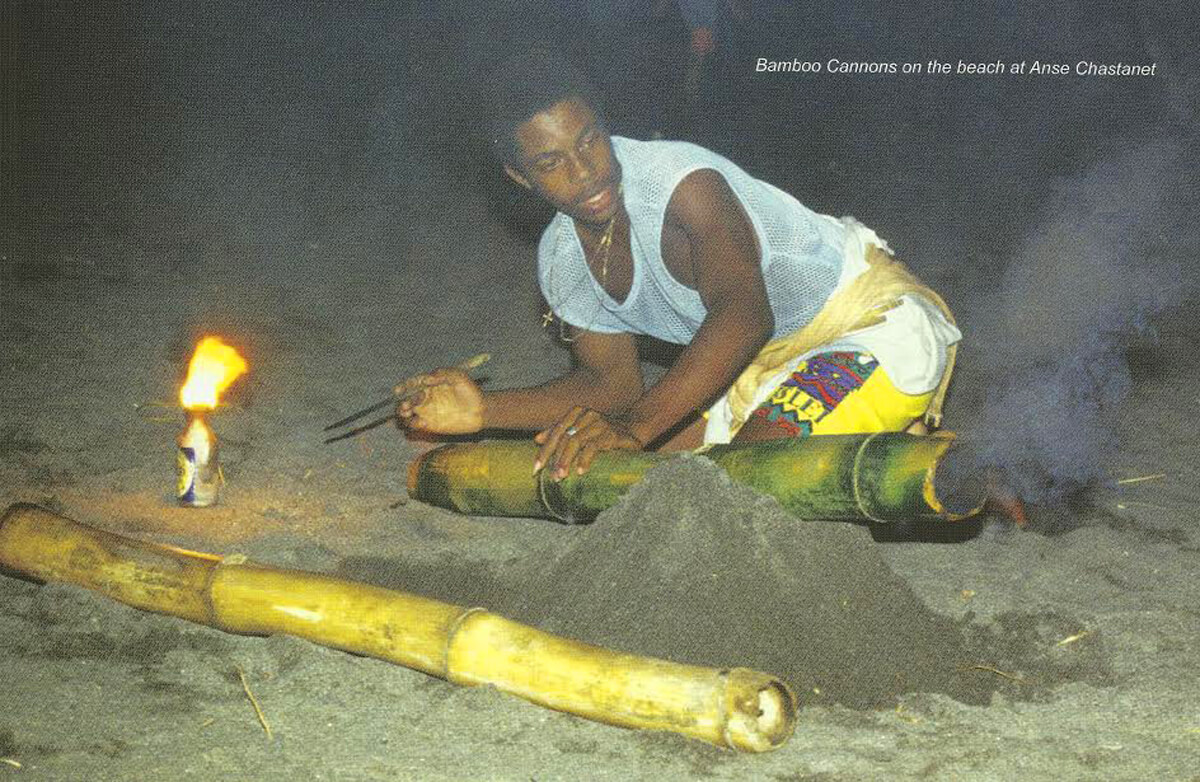
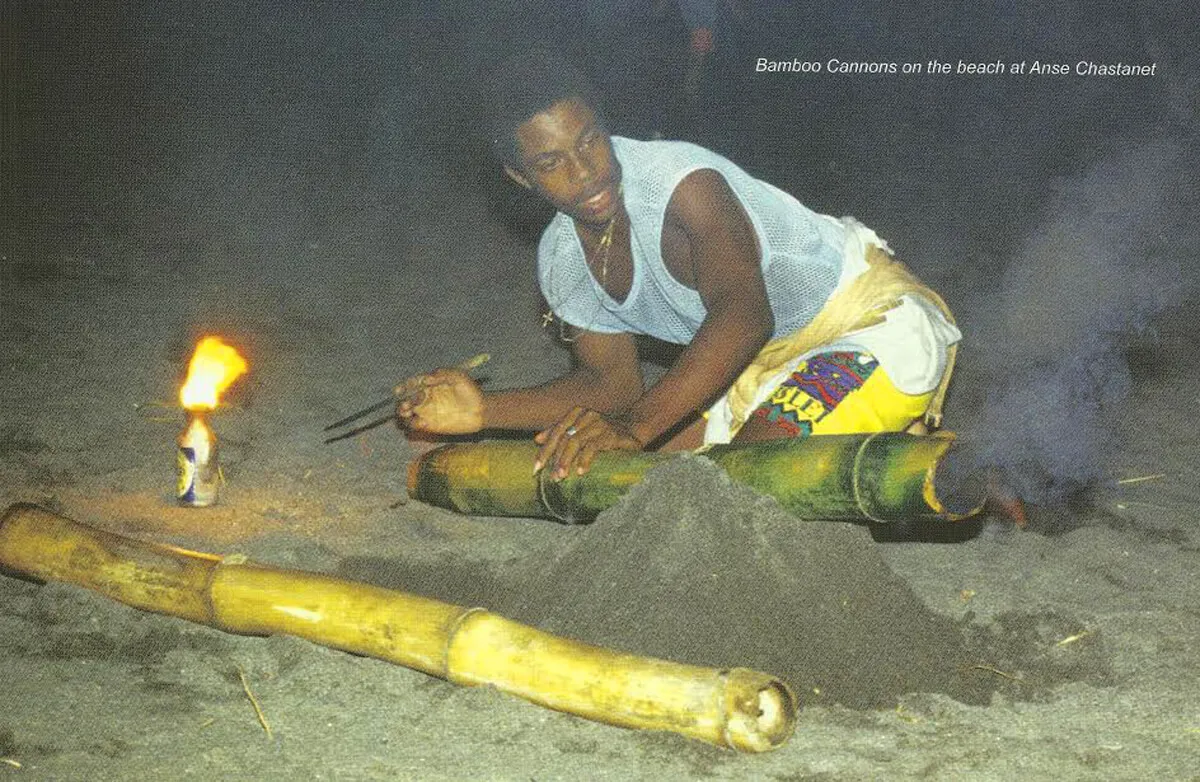
Photograph published by WhereToStay Magazine in its feature on Christmas traditions in Saint Lucia.
Listen for the Boom
In Saint Lucia, there is an especially beautiful example of this idea.
Bamboo is the island’s national plant. But it is also something more than a botanical symbol.
For generations, bamboo has entered Saint Lucian life in practical, creative and ceremonial ways. And during the Christmas and Creole seasons, there is another way the plant becomes part of the cultural landscape: bamboo bursting.
Anyone who has experienced it knows that the sound is difficult to ignore.
A boom moves through the evening.
Then another answers from somewhere beyond the hill.
And another.
Suddenly the landscape itself seems to be participating in the celebration.
Saint Lucia’s government has described bamboo bursting as one of the island’s distinctive Christmas traditions, while contemporary cultural coverage continues to place it within Christmas and Jounen Kwéyòl celebrations.
What interests me is not simply the tradition itself.
It is what the tradition tells us about culture.
A plant becomes material.
Material becomes practice.
Practice becomes memory.
Memory becomes celebration.
And eventually, a sound becomes part of what it means to remember Saint Lucia.
That is culture alive.
But Look at What Happens Next
The story does not have to end with bamboo bursting.
Saint Lucia has also been exploring what else bamboo can become.
In 2023, a bamboo training initiative supported by the Taiwan Technical Mission and facilitated by the Cultural Development Foundation introduced participants to contemporary bamboo design and production. The resulting work included furniture, baskets, jewelry, flower pots, mugs and other products.
That detail is easy to overlook.
But philosophically, it is important.
The same national plant can carry an old tradition and become material for new creative enterprise.
That is the distinction between simply preserving culture and creating from culture.
We do not have to choose between honoring what was and imagining what could be.
Sometimes the most respectful thing we can do with an inheritance is discover another use for it.

Stock photograph: Pexels
There Is a Difference Between Repeating and Continuing
This distinction becomes especially important for people living in the diaspora.
When you live away from the geographical place your ancestors called home, culture can sometimes become something you feel compelled to guard.
You want your children to know where they come from. You want them to understand the language, the food, the music, the history. You do not want distance to become disappearance.
But the child growing up in London, Toronto, New York, Miami or Atlanta is not living the same life their grandparents lived in Castries, Kingston, Bridgetown, Port of Spain or Lagos.
Their reality is different.
Their questions are different.
Their technology is different. Their friendships are different. Their imagination has been shaped by multiple worlds.
Asking them to reproduce the past perfectly may therefore be impossible.
Asking them to create from it may be much more powerful.
When Culture Becomes Material for Creation
Look at what happens when people are given permission to create from what they have inherited.
A traditional rhythm becomes a new song.
An old story becomes a novel.
A grandmother’s recipe becomes a restaurant.
An old word becomes part of a poem.
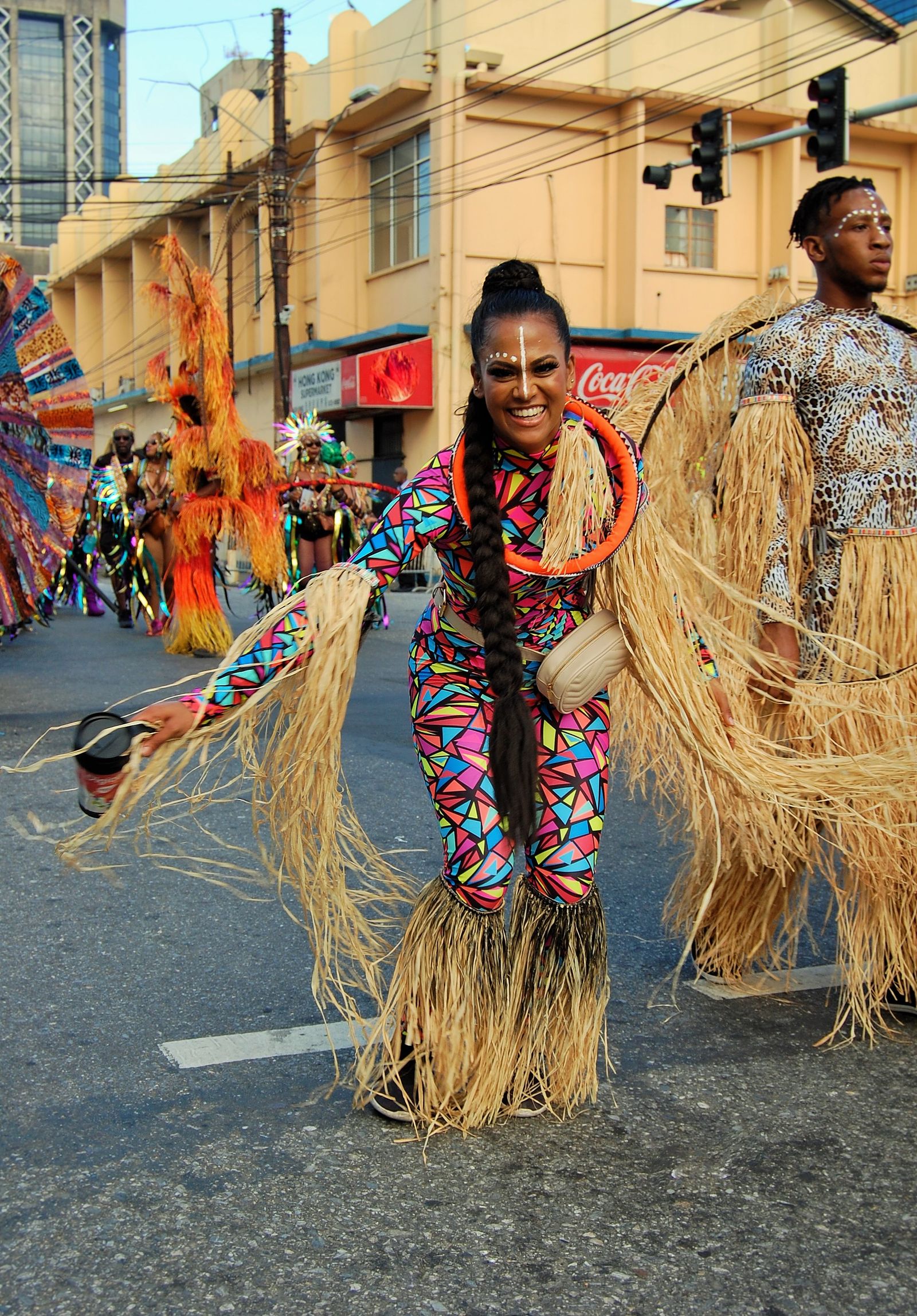
Carnival becomes visual art, photography, fashion, film and scholarship.
An ancestral worldview becomes the foundation for a new approach to business, education, design or community building.
This is not necessarily cultural dilution.
Sometimes it is cultural continuation.
A culture remains alive when people are still capable of making something unexpected from what they have inherited.
The Danger of Preserving Culture Too Carefully
There is an irony in trying too hard to preserve something.
We can become so concerned with keeping culture unchanged that we accidentally remove one of the things that made it powerful in the first place: its ability to respond to life.
Culture that cannot evolve becomes increasingly difficult for younger generations to inhabit.
It becomes something they are asked to respect rather than something they are allowed to participate in.
And there is a profound difference between those two experiences.
A child who is told, “This is what your people used to do,” is receiving history.
A child who is invited to ask, “What can I create from what my people have given me?” is receiving possibility.
Culture Needs Memory. But It Also Needs Imagination.
Memory tells us what has already been carried.
Imagination asks what else might be possible.
We need both.
Without memory, creativity can become disconnected from meaning. It can become imitation without roots, constantly searching elsewhere for inspiration.
But without imagination, memory can become a burden. We spend all our energy protecting yesterday and very little energy creating tomorrow.
The healthiest relationship with culture may therefore be neither preservation nor rejection.
It may be conversation.
We listen to what came before us.
We understand it.
We question it where necessary.
We honor what remains meaningful.
And then we create.
What Are We Adding to the Inheritance?
This question changes the conversation completely.
Instead of asking only whether we are preserving our culture, we might ask what we are contributing to it.
What song are you writing?
What story are you telling?
What language are you teaching?
What business are you building?
What images are you creating?
What ideas are you leaving behind for someone who will come after you?
Culture is not only what our ancestors left us.
Culture is also what we leave for those who have not arrived yet.
A Reflection
Perhaps honoring our ancestors does not always mean becoming more like them.
Perhaps it means understanding that they were trying to make a life from the materials available to them—and then having the courage to do the same with ours.
They had their circumstances.
We have ours.
They created from what they inherited.
We are now standing inside the inheritance they created.
What can we create from what we have been given?
Culture Is Still Becoming
Culture survives when people care enough to remember.
But it becomes powerful when people care enough to create.
The Caribbean and the African diaspora have never been cultures of simple repetition. Our histories are filled with adaptation, reinvention, resistance and creative transformation.
Perhaps that is part of the inheritance itself.
We were not simply given a finished culture.
We were given materials.
Rhythm. Memory. Language. Story. Food. Faith. Struggle. Beauty. Imagination.
And now the unfinished work belongs to us.
What Do You Think?
Does culture survive because we preserve it, or because we continue to create from it?
What part of your culture are you carrying forward—and what are you creating from it that did not exist before?
Leave your thoughts in the comments.
And if this reflection made you think about someone in your family, community or creative circle, share it with them.
Sometimes the preservation of culture begins with a conversation.
Continue the Conversation
If this reflection resonates with where you are in your journey, there are deeper spaces within the ThaPoetic1 ecosystem where these conversations continue.
Through books, creative work, conversation and intentional spaces for realignment, the work is ultimately about remembering what we carry—and becoming conscious of what we are building with it.
If you are navigating a period of creative or personal realignment, a Creative Alignment Session may offer clarity.
And for those building meaningful work with an eye toward legacy, the Legacy Builders Network exists as a space for that journey.



Founder of ThaPoetic1
I Help Others Build Clarity, Wealth & Legacy ➜ ThaPoetic1.org
🧠 Modern Philosophy | 📚 Personal Development 🌱
Where philosophy becomes practice.
Legacy Builders Network is the official classroom of the ThaPoetic1 ecosystem — where courses, guided frameworks, implementation challenges, and community support turn reflection into action.
Enter The Classroom → Join The Newsletter
Leave a Reply